
ICH Q6B Peptide Specification: Analytical Research

Last updated: October 2026
A peptide specification under ICH Q6B is a set of rules for testing the purity and quality of research peptides. ICH (International Council for Harmonisation) created this guide to help labs confirm a peptide is pure, stable, and correct in structure. These tests set clear standards, keeping results accurate and easy to repeat across studies.
Next Level Pharm tests every batch by HPLC (high performance liquid chromatography) and mass spec (mass spectrometry). Every batch is third-party tested..
By setting clear rules for purity, identity, and strength, these standards help labs keep stable conditions during studies. Key takeaways below explain how these rules apply to common research uses.
Key Takeaways
- Quality Framework: ICH Q6B gives labs a clear method to set quality rules for peptides. It helps each batch meet safety and performance standards.
- Critical Quality Attributes: Specs define key tests for identity, purity, and strength. These markers serve as the baseline for checking any research peptide.
- Testing Methods: HPLC and mass spec are the main tools used to confirm purity and weight. These tests catch problems before they affect study results.
- Potency Checks: Bioassays measure how well a peptide works in a lab system. This confirms the compound is active and works as expected.
- Lifecycle Approach: Quality rules start broad and get tighter as a project grows. This mirrors the growth of data and lab experience over time.
These rules help labs avoid errors from impure or damaged samples. Since peptides need exact sequences to work, following Q6B rules keeps research on track. Verified batch data helps researchers rely on their results.
How Does ICH Q6B Define a ‘Specification’?
The ICH Q6B guide defines a specification as a list of tests, methods, and pass or fail limits. A peptide must meet all of these to qualify for research use. These specs set the quality bar for each batch.
The tests check critical quality attributes (CQAs), the key traits of a sample. Common methods include HPLC to measure purity and mass spec to confirm weight. If a result falls outside the set limits, the batch fails the standard.
| Test Type | Method | What It Checks |
|---|---|---|
| Identity | Amino acid analysis, mass spec | Confirms peptide matches target structure |
| Purity | RP-HPLC | Measures target peptide vs impurities |
| Potency | Bioassay, receptor binding | Confirms biological activity level |
| Stability | Accelerated aging, real time | Tracks changes over time and storage |
| Impurity Profile | HPLC, mass spec | Classifies process and product impurities |
What Are Key Tests for Peptide Identity?
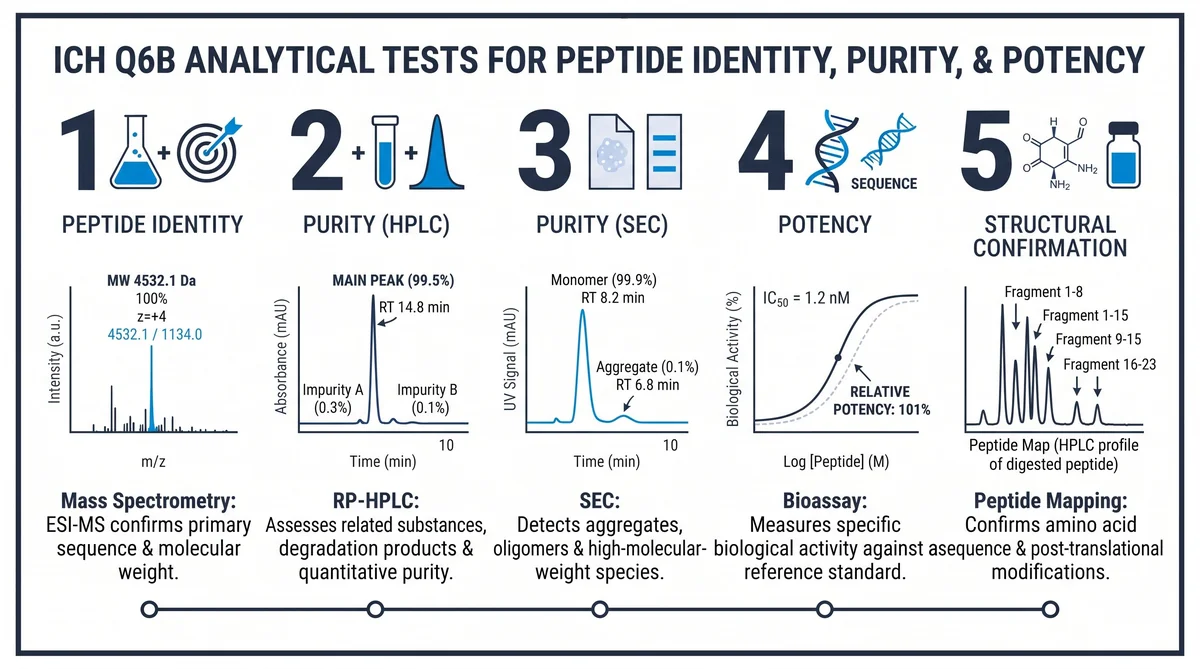
Identity tests confirm that a sample is the right peptide. Labs use amino acid analysis and mass spec to check its makeup. According to the Journal of Peptide Science (2018), labs must run these assays to set the baseline identity of any synthetic chain.
Key identity tests include:
- Amino acid analysis confirms the building blocks.
- Mass spec verifies molecular weight.
- Peptide mapping checks the full sequence.
Scientists break the peptide into pieces and study each one. This maps the full structure and spots any changes. Precise testing ensures the primary structure stays intact during research.
How Is Peptide Purity Assessed Under ICH Q6B?
Purity tests under ICH Q6B measure the target peptide against any impurities found. The main tool is reverse phase HPLC (RP-HPLC). This method splits the target from other substances based on chemical traits.
The result is a chart that shows a peak for each substance. The ratio of the target peak to all peaks gives the purity value. Labs also track process impurities like leftover solvents or salts.
They check for peptide related substances too, such as shortened sequences or changed forms. BPC-157 is available as a COA verified research peptide from Next Level Pharm. Every lot is verified by HPLC and mass spec.
Every lot includes a verified certificate of analysis.
What Does ICH Q6B Say About Peptide Potency?
ICH Q6B defines potency as a measure of how active a peptide is in a biological system. This is a critical quality attribute for any research compound. According to the Journal of Peptide Science (2018), labs must use proper methods to find this activity level.
Potency tests often use bioassays. A receptor binding assay measures how strongly the peptide connects to its target. A cell based functional assay shows its effect on cell pathways.
Results come in units of activity per mass. This allows easy comparison across batches. Clear records of these metrics help labs keep tight control and high accuracy.
Browse research peptides to source COA verified compounds for your next study.
How Do Specifications Evolve During Research?
Peptide specs change as a project moves forward. Early on, labs may use wider limits to focus on basic tests and proof of concept. As the process matures and data grows, these limits get tighter.
Tighter rules matter for complex studies. As production scales up, the output must stay steady. This helps labs keep batch to batch consistency.
By narrowing these limits over time, labs can isolate variables with more precision. This reduces the effect of byproducts. Narrower specs give stronger confidence in the data.
Frequently Asked Questions
What does ICH Q6B specify for peptide characterization?
According to PubMed (2024), this topic draws strong research interest. ICH Q6B says labs must define the physical and chemical traits of a peptide. This includes checking the primary structure, amino acid sequence, and any changes after synthesis.
According to Peptides (2011), these tests need a mix of methods to confirm weight and structure. Proper testing ensures the studied material is the right compound for the lab model.
What analytical tests does ICH Q6B require for peptide purity?
ICH Q6B requires methods that can find and measure impurities in a sample. HPLC is the standard tool for this task. It separates the target peptide from related substances like shortened or missing sequences.
Mass spec also confirms what each impurity is. These tests must be proven to detect contaminants well. Undetected impurities could change study results and lead to wrong conclusions.
How does ICH Q6B define peptide identity testing?
Identity testing under ICH Q6B confirms the substance is the exact peptide meant for the study. Methods include amino acid analysis, peptide mapping, or mass spec. According to the NCBI (2020), these tests make sure the sequence is correct and free from unexpected changes.
Without this step, labs cannot be sure their results tie to the right compound. Identity testing is a key first check in any study.
What potency testing does ICH Q6B require for research peptides?
ICH Q6B requires potency tests to confirm a peptide’s biological activity in a controlled system. This usually involves bioassays that measure how cells or receptors respond to the compound. Potency shows how well a peptide does its intended job.
These tests must be sensitive enough to spot changes in activity level. Results from these assays provide the data needed to see how a compound affects specific pathways.
How is ICH Q6B used in peptide specification design?
This guide serves as a framework for setting pass and fail limits on peptide quality. It helps labs define limits for traits like purity, identity, and biological activity. By picking the right test methods, labs make sure every batch meets set standards before use in a study.
This practice cuts the risk of variation. It supports steady results across different trials and study phases.
Is ICH Q6B a legally binding regulation?
ICH Q6B is a set of guidelines, not a law. It was made for worldwide use in testing biological products. Many regulatory bodies adopt these rules to keep quality consistent.
Most independent labs follow them as a strong standard of practice. This helps make sure their data is accepted by the scientific community. Following these guidelines gives labs a clear path for checking research materials.
What is the difference between characterization and specification?
Characterization is the process of defining a peptide’s physical, chemical, and biological traits during early development. It builds a full profile of the compound. Specification refers to the set of tests and pass or fail limits applied to every batch.
According to Peptides (2011), characterization informs the initial profile. Specifications are the routine checks that confirm each lot meets the set quality benchmarks.
Does ICH Q6B apply to all research peptides?
ICH Q6B was made mainly for biotech and biological products. Its principles also apply well to synthetic research peptides. Many labs use these standards for synthetic compounds to keep purity and consistency high.
When research involves sensitive assays, following these quality rules helps verify the physical traits of the material. This applies whether the peptide is biological or synthetic in origin.
How are impurities classified according to ICH guidelines?
Impurities fall into two groups: process related or product related. Process impurities include leftover solvents, reagents, or catalysts from the synthesis step. Product impurities are variants of the peptide, such as shortened or degraded forms.
According to the NCBI (2020), sorting these substances helps labs track where they came from. This makes it easier to see how each type might affect study data.
What is a Critical Quality Attribute (CQA) in peptide research?
A CQA (critical quality attribute) is a physical, chemical, or biological trait that must stay within a set range. This ensures quality and proper function of the peptide. Examples include purity, identity, and molecular weight.
Labs use CQAs to confirm a peptide acts as expected during a study. By tracking these traits, labs can spot changes in the material and tie all effects to the peptide itself.
Summary
Review your study design and define the exact peptide sequences you need for each assay. Set the purity threshold for each compound based on your test system. Check the batch specific COAs online to confirm all levels meet your standards.
Pick the materials for your lab model and note your storage protocol. Keep the compounds in a stable state until your tests begin. Each vial is HPLC and mass spec tested, with a certificate of analysis and full lot tracking for every batch.
What Should You Do Next?
Confirm that your study design lists the peptide concentration, purity threshold, and test system for each assay. Review the lot specific COA for each compound to verify purity meets the 99% or higher standard.
Next Level Pharm stocks COA verified research compounds for lab teams that need consistent purity across batches. Browse research peptides to source materials for your next study.
Browse recovery peptides for COA verified research compounds.
Browse fitness peptides for COA verified research compounds.
People Also Read
About the Author
Next Level Pharm Research Team
The Next Level Pharm research team is made up of biochemists and lab scientists. Their goal is to give researchers the highest-purity, COA-tested compounds on the market. Every batch is HPLC and mass spec confirmed before dispatch.
Disclaimer: The information provided on this page is for educational and research purposes only. Next Level Pharm’s products are intended for laboratory research use only. They are not intended for human consumption, diagnostic, therapeutic, or medicinal purposes. This content does not constitute medical advice. Always consult a licensed healthcare professional before making any health-related decisions.