
Apelin Peptide Research: APJ Receptor Mechanism

Last Updated: October 2026
An apelin peptide APJ receptor research study is an investigation of how apelin, a natural neuropeptide, binds the G protein-coupled APJ receptor. Apelin isoforms range from 13 to 36 amino acids. Each shows distinct binding affinity. These isoforms activate intracellular signaling cascades tied to cardiovascular and metabolic regulation in cell culture models.
Next Level Pharm provides high-purity research compounds for the scientific community. Every batch gets HPLC and mass spec testing. The brand holds a 99.4% average purity. This covers its last 100 batches. A COA is included with every order. These compounds are lyophilized and sealed under an inert gas. This keeps them stable at room temperature. The catalog holds 70+ active peptide SKUs for lab use.
Inventory is stored in the United States. Average dispatch time is about 48 hours. The platform offers bundles like the GLOW stack. The GLOW stack combines BPC-157, TB-500, and GHK-Cu. It is designed for targeted research. Researchers may also access the KLOW stack. The KLOW stack adds KPV to those three compounds. Each bundle is for research use only. Clear lot data and purity metrics keep the supply process transparent.
Key Takeaways
- Endogenous Signaling System: Apelin serves as the primary peptide ligand for the APJ receptor. This receptor acts as a G protein-coupled receptor within various biological tissues.
- Structural Isoform Diversity: Apelin originates from a common precursor molecule. Exists in multiple distinct forms. Common isoforms studied by researchers include apelin-13 and the longer apelin-36 chain.
- Cardiovascular Regulation: The apelin and APJ system helps regulate blood pressure and cardiac muscle contractility. Research shows these pathways are central to the maintenance of healthy vascular tone.
- Metabolic Pathway Influence: Studies suggest this peptide system plays a part in energy metabolism processes. This includes data regarding glucose homeostasis and insulin sensitivity in lab models.
- Targeted Synthetic Analogs: Current research focuses on the specific actions of different apelin isoforms. Scientists design synthetic analogs to isolate binding activity for targeted study.
The sections below explore mechanisms of action. They also cover receptor distribution. These define how this peptide behaves in lab models. Researchers review these details to see how structural shape affects study results.
What is the Apelin/APJ Signaling System?
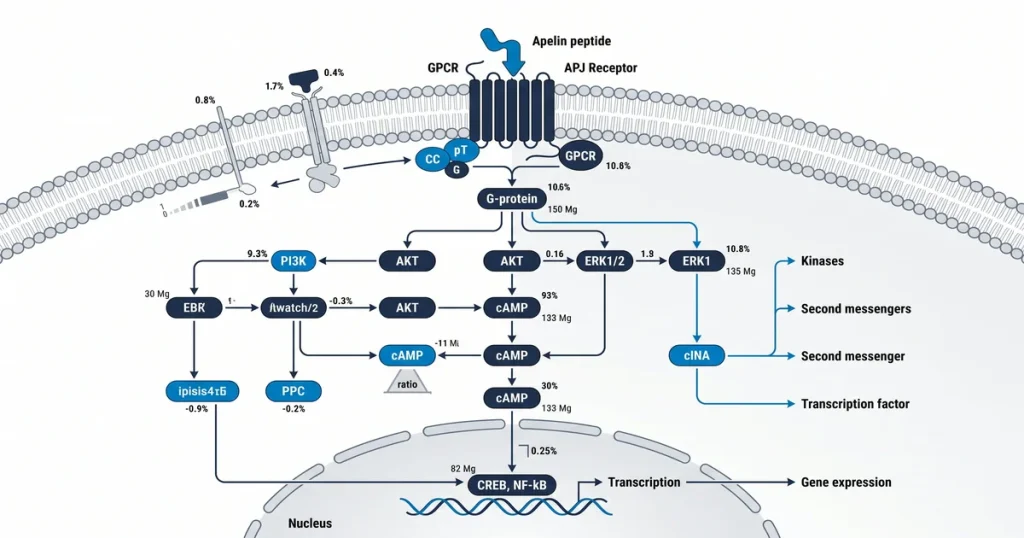
The apelin/APJ system is a key pathway. It involves apelin and the APJ receptor (GPCR). The system activates when apelin binds to the APJ receptor, triggering intracellular signaling events. The receptor was once an orphan receptor; modern research now maps its role in many tissues. Per the Journal of Peptide Science (2018), this pathway is highly conserved and vital for homeostasis.
The APJ receptor is expressed widely across the body. It is found in cardiovascular, nervous, and metabolic systems. Apelin isoforms bind to the receptor to activate the system. This shifts how cells process signals. These isoforms vary in length. They share binding traits at the GPCR site. This pathway shapes how tissues respond to natural stress. Apelin-13 is available as a COA-verified research peptide. Every lot is verified by HPLC and mass spec. This receptor is widely expressed. It shows apelin is a central signaling node. Researchers study peptide-receptor binding in lab models. They observe how it affects cell activity.
How Does Apelin Bind to the APJ Receptor?
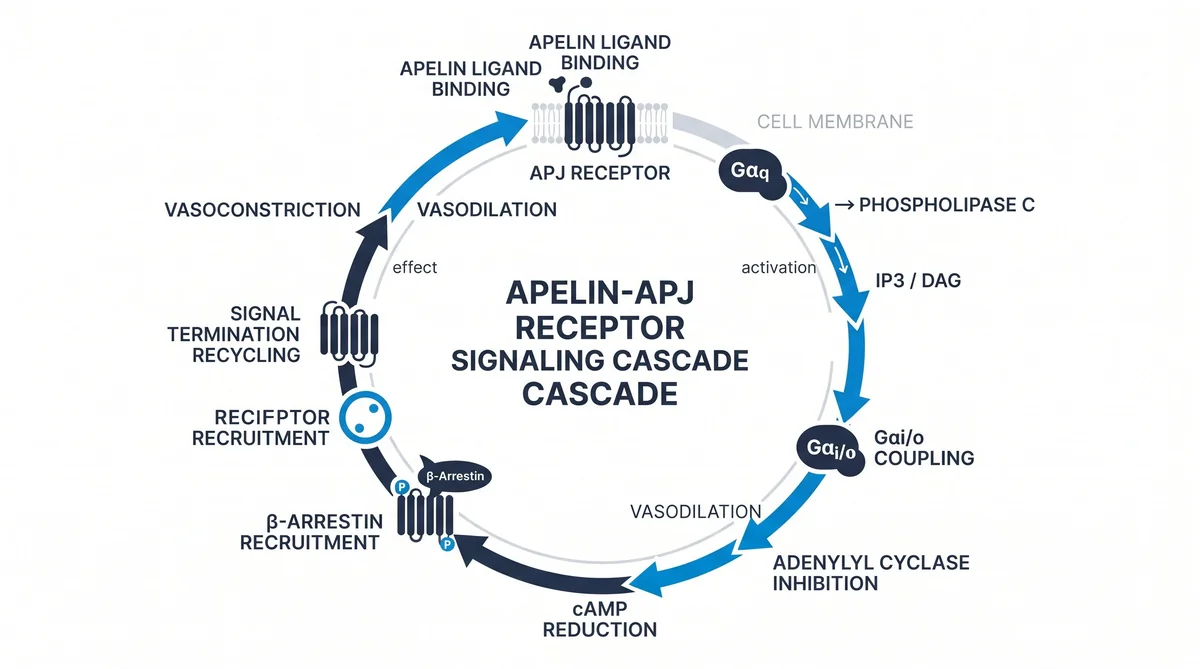
Apelin isoforms bind to a specific pocket. This pocket is on the APJ receptor. Binding causes a conformational change. The change triggers intracellular signal transduction. The peptide must fit into the receptor site. This is key for the interaction. Per PubMed (2005), this binding event activates G-protein signaling. This occurs in cell models. Peptide size and shape set receptor fit. This mechanism remains central to peptide-receptor activation studies.
Apelin-13 and apelin-36 come from a 77-amino acid preproprotein. Enzymatic cleavage creates them. These isoforms show different binding affinities in cell systems. Their potencies differ too. Structural length affects how each peptide fills the receptor space. Apelin-13 is available as a COA-verified research peptide. Every lot is verified by HPLC and mass spec.
What Are Apelin’s Primary Biological Functions?
Apelin regulates cardiovascular function, fluid homeostasis, and cardiac contractility. It binds to the APJ receptor. This receptor is part of the G-protein coupled receptor family. Per PubMed (2012), the apelin/APJ system modulates vascular tone. It also affects tissue fluid balance in models. Research shows this pathway affects myocardial function. It also affects metabolic health. These effects make apelin central to homeostatic control.
Apelin (https://nextlevelpharm.com/product/apelin-12) is available as a COA-verified research peptide. Every lot is verified by HPLC and mass spec. Preclinical studies show apelin can lower blood pressure. This is seen in animal models. It works via action on blood vessel relaxation. Data also suggest it increases heart muscle contraction force. The compound stimulates glucose uptake in peripheral tissues. This is observed in metabolic studies. Researchers study these functions for the peptide’s role. This includes energy metabolism and vascular stability.
Researchers studying metabolic signaling can explore growth hormone pathways. The fitness and GH research collection is at https://nextlevelpharm.com/product-category/fitness-and-gh/.
Which Apelin Isoforms Are Most Studied?
Apelin-13, apelin-17, and apelin-36 are the most studied isoforms. These are C-terminal fragments of the same proprotein. They retain high binding affinity for the APJ receptor. This is why they are studied. Each also shows a distinct metabolic profile. Apelin-13, apelin-17, and apelin-36 are each available as COA-verified research peptides. Every lot is verified by HPLC and mass spec. Their amino acid sequences drive different receptor activation patterns. Researchers favor these variants for this reason.
Structural differences among these isoforms change plasma half-life. They also affect stability. Apelin-13 shows high potency. But it may degrade faster than apelin-36. Per Peptides (ScienceDirect) (2014), C-terminal sequence length affects peptidase interactions in blood. Researchers compare these isoforms. They see how sequence length affects duration of action. By isolating these fragments, scientists better map APJ receptor activation. These are cardiovascular and metabolic studies. This structural comparison is core to peptide research.
How is Apelin Studied in Cardiovascular Models?
Apelin is studied in cardiovascular models. Both in vitro and in vivo methods are used. Researchers use isolated cardiomyocytes to monitor cell responses. They look for positive inotropic effects. These show stronger heart muscle contraction. These cell models give a precise view of apelin’s effects. They show how signals affect heart tissue. Animal models of hypertension or heart failure also provide data. These studies show how the peptide modulates whole-body blood pressure. They often observe vasodilation. They measure flow resistance effects in a living system.
Apelin-13 is available as a COA-verified research peptide. Every lot is verified by HPLC and mass spec.
Beyond contractility, scientists study angiogenesis. This is the growth of new blood vessels. It occurs in damaged areas. Per PubMed (2012), this APJ receptor work is a primary focus. It covers vascular and cardiac output studies. Investigators study the peptide’s role. It counteracts changes from chronic pressure overload. Researchers compare isolated cell results with animal model data. This separates local cardiac from systemic vascular responses. This two-tier method is standard for isolating biochemical effects. It applies to apelin and cardiovascular physiology.
What Future Research Directions Exist for Apelin?
Future apelin research focuses on stable synthetic analogs. It also covers biased agonists. These compounds aim to improve the selectivity of receptor binding. This may allow more precise control in experimental models. By refining these structures, researchers isolate useful signaling outputs. They can also limit off-target effects. Per the Journal of Peptide Science (2018), modified backbones are a key priority. This supports stable peptide-receptor binding.
Elabela is a second natural APJ receptor ligand. Its study is a new research area. Elabela binds to distinct sites on the APJ receptor. It also triggers unique signaling pathways compared to apelin. Apelin-36 is available as a COA-verified research peptide. Every lot is verified by HPLC and mass spec. Ongoing studies map how these ligands activate cellular cascades. They work in different ways. These findings show fine body control over vascular and metabolic systems. Researchers compare how synthetic and natural ligands affect cellular outcomes.
Frequently Asked Questions
What is the APJ receptor in apelin research?
The APJ receptor is a G protein-coupled receptor. It is the specific binding site for the apelin peptide. It was once called an orphan receptor because its natural ligand was unknown. It is now a recognized node for cardiovascular and metabolic signaling, widely expressed in the body. This lets it influence diverse processes through G-protein pathways. According to PubMed (1998), it is a key research target.
How does apelin-13 differ from apelin-36?
Both are cleavage products of the same 77-amino acid precursor and differ in structural length. Apelin-13 is shorter, very potent, and often used in cardiovascular assays. Apelin-36 has a longer sequence that may alter its binding affinity in certain environments. These differences give researchers distinct tools. They use them to probe how peptide length affects APJ receptor activation.
What signaling pathways does apelin activate?
Apelin binds the APJ receptor and triggers intracellular cascades. One key action is inhibition of adenylate cyclase, and the receptor also stimulates protein kinase pathways. These actions modulate cell survival, migration, and metabolic activity. According to the Journal of Peptide Science (2018), the system also regulates calcium levels in cells. By mapping these signals, researchers isolate how the ligand affects homeostasis in lab models.
How is apelin receptor binding quantified?
Researchers use radioligand displacement assays to quantify binding. Fluorescent labeling also measures how well a compound competes for the APJ receptor pocket. High-resolution imaging helps confirm binding strength. Cell-based reporter systems are also used. These metrics show the potency of apelin derivatives and synthetic analogs in academic studies.
What in vitro models are used in apelin studies?
In vitro studies use primary cell lines like cardiomyocytes and endothelial cells. Researchers also use transfected cell models that overexpress the human APJ receptor. This ensures consistent ligand interaction data. According to NCBI (2015), these environments isolate specific intracellular responses. Scientists observe changes in protein phosphorylation and glucose uptake. These cells remove the systemic variables found in complex organisms.
What is the relationship between apelin and angiotensin II?
Apelin and angiotensin II both affect cardiovascular function but often have opposing effects on vascular tone. Angiotensin II is linked to increased blood pressure, while apelin has been studied to promote vasodilation. Research suggests the apelin/APJ system counterbalances the renin-angiotensin system. According to PubMed (2012), apelin affects cardiac output in experimental models. Comparing these pathways helps researchers map vascular control mechanisms.
How does apelin influence angiogenesis in lab models?
Apelin has been shown to modulate angiogenesis. This is the process of forming new blood vessels. In lab assays, apelin often stimulates endothelial cell growth and migration. Scientists observe how these effects shape vessel structure and density. Per PubMed (2012), this APJ receptor work is a primary research area. Investigators map how the peptide regulates vascular growth in response to chemical signals.
Are there synthetic apelin analogs in research?
Yes, researchers use synthetic apelin analogs designed to mimic or modify natural apelin activity. They are engineered for better stability, receptor binding, or signaling bias in lab assays. Modified peptides let investigators test parts of the apelin pathway. They resist the rapid degradation seen with native sequences. Such synthetic tools help refine studies on the APJ receptor’s broad functional roles.
What is Elabela/Toddler in relation to apelin?
Elabela, also known as Toddler, is a second natural APJ receptor ligand. It shares the same receptor as apelin but may be expressed in different developmental contexts. Studies suggest both ligands regulate the apelin/APJ signaling system with unique binding characteristics. Investigating how Elabela interacts with the APJ receptor broadens research. It shows how distinct peptides coordinate vascular and metabolic signals in lab models.
What Should You Do Next?
Review your current research protocols. Select the apelin isoform that aligns with your study objectives. Compare binding affinity and molecular weight data in the COA against your baseline. Confirm consistency across your lab series. Verify that your storage methods maintain lyophilized integrity. Ensure compounds are stable until you are ready to start your cell-based assays.
Researchers sourcing these peptides can explore the fitness. GH research catalog at Shop. Every vial ships from Next Level Pharm with a certificate of analysis. Full lot traceability for your records.
People Also Read
- What Are Longevity Peptides? A Complete Research Review
- What Are Nootropic Peptides? Mechanisms, Research Review
About the Author
Next Level Pharm Research Team
The Next Level Pharm research team is composed of biochemists and laboratory scientists dedicated to providing researchers with the highest-purity, independently verified peptides available. Every batch is HPLC and mass spec verified before dispatch.
Disclaimer: The information provided on this page is for educational and research purposes only. Next Level Pharm’s products are intended for laboratory research use only. They are not intended for human consumption, diagnostic, therapeutic, or medicinal purposes. This content does not constitute medical advice. Always consult a licensed healthcare professional before making any health-related decisions.