Why Peptide Vials Are Vacuum-Sealed: Stability Data

Last updated: July 2026
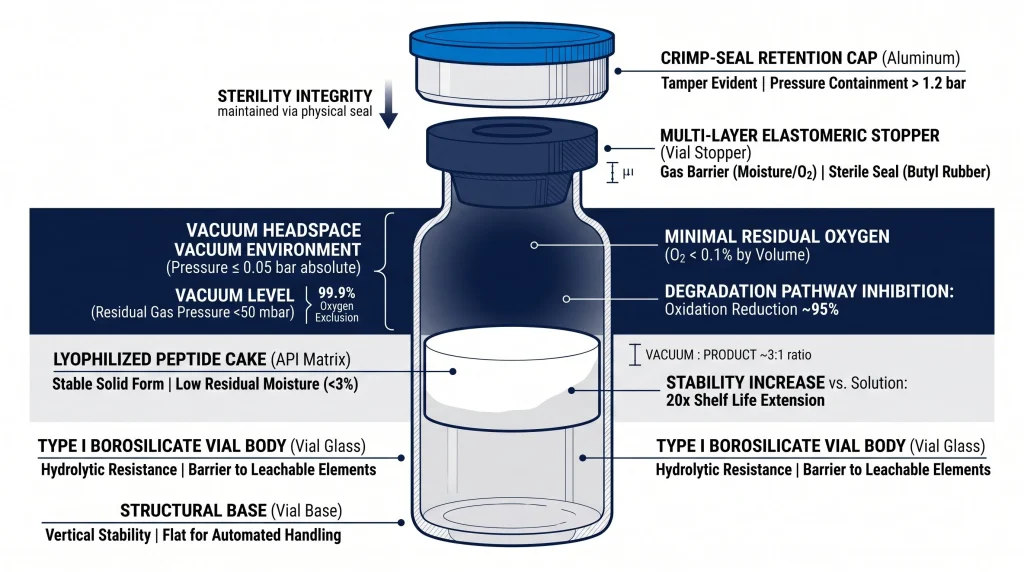
A peptide vial vacuum seal is a process that removes air and moisture from a vial before it is sealed shut. This blocks chemical decay and protects the dry powder inside. A stable vial interior is vital for research results. Most high-quality vials ship at a 99.4% average purity across recent batches to ensure precise results.
Next Level Pharm holds to this standard with strict quality controls on every lot. Each vial is tested by HPLC and mass spec to confirm the identity and purity of the peptide. Every batch is cleared before release to meet high lab standards. Its catalog has over 70 active peptide SKUs across many research areas.
Properly sealed vials protect the freeze-dried compound from moisture and air during transit. Stability stays high at room temp because the sealed vial removes the need for a cold chain. This barrier holds the peptide stable until the researcher opens the vial. Every order ships with a COA (certificate of analysis) for full lot traceability.
Key Takeaways
- Oxygen and Moisture Barrier: Vacuum sealing removes both elements to slow decay and protect peptide purity.
- Oxidation Prevention: Oxidation is the main threat to peptide integrity. Sealing the freeze-dried product under vacuum limits this risk.
- Visual Inspection of the Cake: A solid, uniform puck shows quality. A shrunken puck may signal a broken seal.
- Purity Verification: HPLC and mass spec are the key methods to confirm peptide purity. Visual checks alone are not enough.
- Impact of a Broken Seal: A lost vacuum starts the decay process and cuts the shelf life of the compound.
Researchers should check these stability factors to ensure accurate data. Knowing how air exposure affects molecular chains helps keep results valid across all protocols.
What is the purpose of vacuum-sealing peptides?
Vacuum sealing creates an inert space inside the vial to protect the freeze-dried peptide. By removing oxygen and water vapor, the process blocks chemical change in the delicate powder. This level of protection ensures chemical stability for BPC-157 5mg and other research compounds. According to NCBI (2013), freeze-dried peptides stored under inert conditions hold their structure far longer than air-exposed samples. Stable storage is vital for long-term research results.
This space blocks two decay pathways. Oxidation occurs when oxygen bonds with the peptide chain and alters its form. Hydrolysis happens when water breaks essential chemical bonds. Vacuum sealing stops both to preserve purity and chain structure.
How does oxygen degrade research peptides?
Oxygen degrades research peptides by starting oxidation. This reaction alters specific amino acid residues and can cut the molecule’s value for research. These changes occur when oxygen bonds with sensitive side chains. Such shifts add chain variance that can disrupt study outcomes.
Residues like methionine (Met) and cysteine (Cys) are prone to this change. Oxidation often leads to sulfoxide formation or the creation of disulfide bridges. According to NCBI (2017), oxidative changes to Met and Cys are among the most common decay pathways in stored peptide samples. These changes shift the three-dimensional shape of the chain. Because activity relies on specific molecular shapes, such alterations often cut its use for research.
What role does moisture play in peptide stability?
Moisture degrades peptide stability by enabling hydrolysis. In this reaction, water molecules cleave the peptide bonds that link amino acids together. This breaks the primary structure and causes rapid loss of sample quality. When water enters a vial, it acts as a catalyst for chemical decay.
Freeze-drying removes most water from the sample to create a stable powder. Vacuum sealing then blocks moisture from re-entering the vial. Because these powders pull in water, any air exposure quickly leads to vapor uptake. This leads to rapid decay and loss of sample integrity. Researchers working with recovery peptides must maintain sealed conditions to protect the chain structure.
What does a lyophilized cake’s appearance indicate?
The look of the freeze-dried cake acts as a key sign of seal quality. A full, solid puck or fine powder suggests proper freeze-drying and a secure seal under an inert atmosphere. When the material holds this original form, it suggests the contents remain stable for research use.
In contrast, a shrunken or irregular mass often signals a broken seal. Such changes usually occur after moisture enters during storage or handling. This leads to hydrolysis and chain decay of the sample. When the texture shifts from a uniform puck, the purity profile becomes suspect for precise assays. Any vial showing these signs should not be used in lab testing.
How do labs verify peptide purity and seal integrity?
Labs verify peptide purity using HPLC (High-Performance Liquid Chromatography) to separate components. Mass spec (MS) then confirms the exact molecular weight. These methods ensure the compound matches its scientific profile. Seal integrity is checked via vacuum decay testing during production. This test finds small leaks to confirm the product stays stable before dispatch.
Reputable suppliers provide a COA (Certificate of Analysis) with each batch. This document captures HPLC and MS data to verify the identity of the sealed product. According to NCBI (2020), COA records are a standard need for research-grade peptide samples. Next Level Pharm provides a batch-specific COA with lot-level data for every order shipped.
Does a broken vacuum always mean the peptide is bad?
A lost vacuum means the seal has failed but does not mean the material is unfit for research. The main concern is the impact on long-term stability. Moisture and oxygen can start faster decay within the freeze-dried cake. If a vial arrived without the expected hiss on opening, the sample may have lost its inert space.
For studies that need high precision, such a sample may not be suitable. The rate of decay depends on the specific peptide, ambient temp, and time of air exposure. Steady results depend on keeping material intact until use.
What Are the Key Seal Integrity Signs?
The table below summarizes the main signs used to assess vial seal quality in a lab setting.
| Indicator | Intact Seal | Broken Seal |
| Freeze-dried cake | Uniform, solid puck | Shrunken, gooey, or irregular |
| Sound on opening | Audible hiss | No hiss |
| Powder texture | Fine, crisp | Clumped or damp |
| Color | White to off-white | Yellow or discolored |
| Vacuum decay test | Pass | Fail or borderline |
| HPLC purity | >=99% | Reduced or unclear |
Frequently Asked Questions
Why Are Lyophilised Peptides Vacuum-Sealed?
Vacuum sealing pulls oxygen and moisture out of the glass vial before closure. This creates an inert space that blocks air decay. Low pressure keeps the freeze-dried powder stable in storage. The powder cannot absorb air or moisture while the seal holds. This ensures each vial arrives with its purity intact and ready for lab use. The freeze-dried form retains its molecular structure until the researcher opens the vial.
What Does a Broken Vacuum Indicate?
A broken vacuum means the airtight seal has failed, allowing air to enter. This shift from a sealed state to ambient pressure means the powder may now be exposed to moisture and oxygen. While this does not mean the material is right away unusable, it does mean the prior shelf life no longer applies. The extent of any decay depends on the time of exposure and ambient conditions.
How Does Oxygen Exposure Degrade Peptides?
Oxygen exposure starts oxidation, a process that alters sensitive amino acid residues such as methionine and cysteine. This often results in sulfoxides or disulfide bonds, changing the chain shape of the peptide. According to Molecules (MDPI) (2019), these changes can reduce the reactivity of a substance for testing. Keeping contact with ambient air low stops these structural changes and preserves research results.
Why Does the Cake Appearance Matter?
The cake is the porous puck of powder at the bottom of the vial. It provides a visual sign of the freeze-drying process and seal quality. A uniform, stable cake suggests efficient drying under proper vacuum conditions. A degraded or shrunken appearance may suggest moisture remained in the vial or the vacuum was lost. Steady physical appearance is a standard quality check for research peptides.
How Is Seal Integrity Tested Before Dispatch?
Seal integrity is tested during production using vacuum decay testing. This method measures pressure levels within the vial to confirm no gas leaks are present. This approach lets the lab detect even small seal failures that could allow moisture ingress. Next Level Pharm confirms the quality of these vials through strict batch-level checks before dispatch.
Can you visually see the vacuum in a peptide vial?
The vacuum itself is not visible, but its presence is identified by the physical behavior of the contents. A properly sealed vial often shows a tightly packed, crisp powder structure that remains still. If the seal has failed, the powder may appear loose or clumped. Researchers should rely on vacuum decay tests performed at the lab rather than visual cues alone.
What is the hiss sound when opening a peptide vial?
The audible hiss is the movement of air into the vial as the vacuum seal is broken. The pressure difference causes a small amount of ambient air to rush in. This confirms the bottle was sealed at the time of opening. If no sound is heard, this may mean the vacuum was already lost, which could affect the chemical stability inside.
How should a peptide be stored after the vacuum seal is opened?
Once opened, the peptide should be kept in a cool, dark, and dry area to reduce air stress. If the compound has been mixed, store it at cold temp to slow potential decay. Light or temp swings can speed up breakdown of the peptide chain. Steady storage conditions help ensure the peptide stays valid for follow-up research.
Are all research peptides lyophilized and vacuum-sealed?
Many research peptides are freeze-dried for high stability, but not every compound requires this method. The need for a vacuum seal depends on the chemical stability of the compound and its risk of decay. Most sensitive research peptides are offered in this form to extend shelf life. Always check the specific product data sheet to confirm production and storage needs.
Is the peptide still usable if the vial does not hiss on opening?
The absence of a hiss may mean that the internal pressure has matched the outside environment. This suggests a possible seal failure. If the vacuum is absent, the peptide may have been exposed to oxygen and moisture. While this does not mean the substance is hazardous, its chemical purity for a study is no longer validated. Researchers should exercise caution with such samples.
Summary
Vacuum sealing is a core quality measure for freeze-dried research peptides. It removes oxygen and moisture from the vial before hermetic closure, protecting the powder from oxidation and hydrolysis. A solid, uniform cake and an audible hiss upon opening are key signs of a secure seal. HPLC and mass spec verify purity at the molecular level. Vacuum decay testing confirms container integrity before dispatch.
Sourcing from a supplier with batch-specific COAs and lot-level data ensures that seal and purity records are available for every order.
What Should You Do Next?
Labs checking peptide quality should confirm that storage vials display intact seals before starting any protocol. Review the COA for each batch to confirm HPLC and mass spec results match the lot specification. Browse COA-verified, vacuum-sealed research peptides at Next Level Pharm with lot-level data on every order.
People Also Read
- What Makes a Peptide Research Grade? Standards and Testing Explained
- BPC-157 vs TB-500: A Detailed Research Comparison Guide
About the Author
Next Level Pharm Research Team
The Next Level Pharm research team is composed of biochemists and laboratory scientists dedicated to providing researchers with the highest-purity, COA-verified research peptides available. Every batch is HPLC and mass spec verified before dispatch.
Disclaimer: The information provided on this page is for educational and research purposes only. Next Level Pharm’s products are intended for laboratory research use only. They are not intended for human consumption, diagnostic, therapeutic, or medicinal purposes. This content does not constitute medical advice. Always consult a licensed healthcare professional before making any health-related decisions.