
BPC-157 vs KPV: Anti-Inflammatory Research

Last updated: July 2026
A BPC-157 vs KPV peptide research comparison is a review of two anti-inflammatory sequences studied in preclinical models. BPC-157 is a 15-amino acid gastric peptide. KPV is a 3-amino acid fragment of alpha-melanocyte-stimulating hormone (alpha-MSH). Each compound acts through a separate cell pathway. Research teams study these differences to map how peptide structure shapes molecular signaling.
Next Level Pharm supplies COA-verified, research-grade BPC-157 and KPV for lab use. All batches are tested by HPLC and mass spectrometry. Average purity across the last 100 batches is 99.4%. Each vial arrives lyophilized and sealed. Every batch is third-party tested..
These two peptides appear in studies on inflammation, gut biology, and tissue signaling. Knowing how they differ helps labs pick the right compound for each study model.
Key Takeaways
- Structural Contrast: BPC-157 is a 15-amino acid peptide. KPV is a 3-amino acid tripeptide from alpha-MSH.
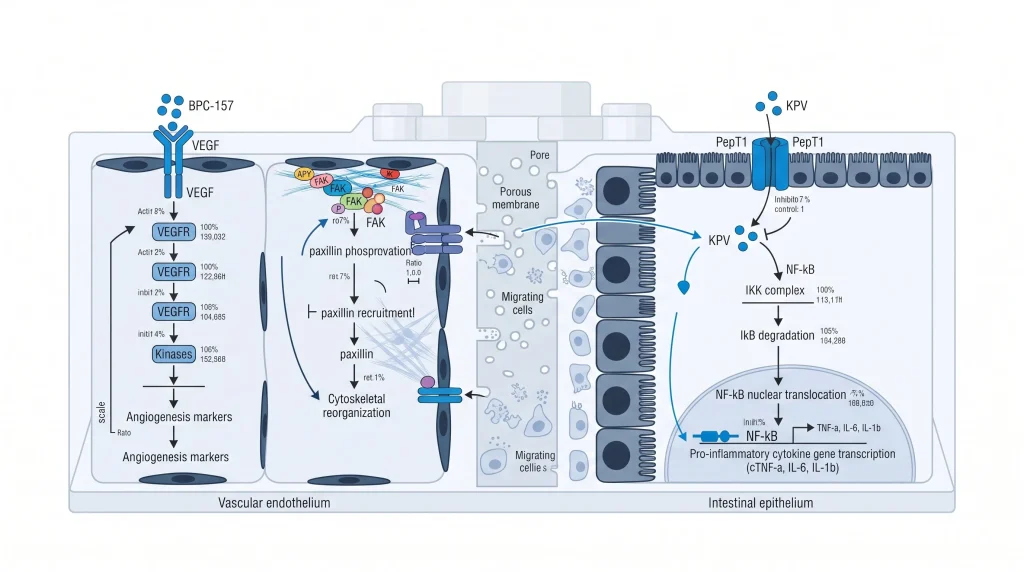
- Pathway Divergence: BPC-157 acts through growth factors and the nitric oxide (NO) system. KPV targets the NF-kB pathway via the PepT1 transporter.
- Receptor Specificity: BPC-157 activates FAK-paxillin and VEGF pathways. KPV acts through the melanocortin 1 receptor (MC1R) and enters cells via PepT1.
- Primary Research Focus: BPC-157 is studied in gut and tissue repair models. KPV is studied in gut colitis and skin immune models.
- Quality Standard: Both peptides need COA-verified sourcing. This ensures observed effects come from the compound, not from contaminants.
Labs pick between these peptides based on the specific pathway and tissue type in the study.
What is BPC-157’s primary mechanism?
BPC-157 acts on the nitric oxide (NO) system and triggers blood vessel growth through VEGF upregulation. It also activates the FAK-paxillin pathway to guide cell movement and attachment. These actions support vascular network formation in tissue models across multiple organ systems.
According to PubMed (2015), BPC-157 shows consistent activity in gut and vascular model systems. Scientists in tissue repair studies select this compound for its role in growth factor pathways. Three pathways stand out in studies.
- Nitric oxide (NO) synthesis and release.
- VEGF-linked blood vessel growth.
- FAK-paxillin cell movement signaling.
The recovery peptides category includes BPC-157 alongside related compounds for lab sourcing. Each lot is COA-verified by HPLC and mass spectrometry before dispatch.
How does KPV’s mechanism differ from BPC-157?
KPV enters cells through the PepT1 (SLC15A1) peptide transporter. Once inside, it blocks nuclear factor kappa B (NF-kB), a protein complex that drives inflammation-promoting gene expression. This pathway differs from BPC-157’s growth factor and NO signaling. KPV also binds the melanocortin 1 receptor (MC1R) on the cell surface to reduce downstream immune markers.
According to PubMed (2008), KPV reduces inflammatory activity in gut lining cells by blocking NF-kB through the PepT1 transporter. This entry route sets KPV apart from peptides that act only at the cell surface. Scientists use it in models where NF-kB control is the primary study variable.
Which is studied more for gut inflammation?
BPC-157 is more widely cited in gut research than KPV. It covers a broader range of injury models, such as ulcers, colitis, and structural gut repair. Its protective activity across multiple tissue sites makes it a common reference peptide in gut biology studies. KPV also appears in gut colitis models, where NF-kB block is the main focus.
Shop research peptides at Next Level Pharm
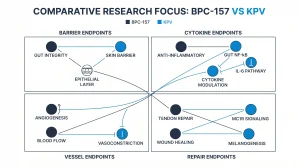
The anti-inflammatory peptide research overview covers how these compounds compare in the peptide literature. Researchers picking between BPC-157 and KPV for gut studies base the choice on whether the model needs vascular repair or direct NF-kB control.
What does skin research show for KPV vs BPC-157?
KPV is more often studied in skin immune models. Its parent hormone, alpha-MSH, acts through MC1R to regulate skin immune responses. KPV keeps this receptor activity. It has been studied for its ability to reduce immune cytokine output at the cell level. BPC-157 appears in skin wound healing research through blood vessel growth and cell movement.
According to PubMed (2019), BPC-157 supports structural tissue repair through vascular and cellular pathways. The two peptides address skin inflammation from different angles.
- KPV targets NF-kB signaling via PepT1 entry and MC1R binding.
- BPC-157 supports structural repair through blood vessel growth and cell movement.
Are BPC-157 and KPV structurally different?
Yes. BPC-157 is a 15-amino acid peptide derived from a gastric protein. KPV is a tripeptide with the sequence Lysine-Proline-Valine (K-P-V), taken from the C-terminal end of alpha-MSH. These structural differences shape how each peptide moves through biological barriers and binds its target receptors.
BPC-157’s longer chain allows broad contact with multiple pathway parts. KPV’s compact size lets it enter cells directly via PepT1. Key structural data is below.
- BPC-157: 15 amino acids, molecular weight about 1419.5 Da.
- KPV: 3 amino acids, molecular weight about 352.4 Da.
The recovery peptides comparison guide covers structural comparisons across related research compounds.
How does their chemical stability compare?
Both peptides are supplied in lyophilized (freeze-dried) form. This form removes moisture that speeds peptide breakdown. After mixing, storage conditions set how long each compound stays active in solution.
BPC-157 in acetate salt form has shown stability in lab studies using simulated gastric conditions. KPV stability in solution depends on pH and storage buffer temperature. Researchers follow lot-specific guidance on each COA to ensure consistent compound performance. Both need careful handling after mixing to keep lab activity across study sessions.
| Feature | BPC-157 | KPV |
| Sequence | 15 amino acids | 3 amino acids (K-P-V) |
| Primary pathway | NO system, VEGF, FAK-paxillin | NF-kB block via PepT1 |
| Primary receptor | VEGF receptor, FAK | MC1R, PepT1 (SLC15A1) |
| Research model | Gut injury, tissue repair, vascular | Colitis, skin inflammation |
| Anti-inflammatory action | Indirect: growth factor and NO control | Direct: nuclear NF-kB block |
| Key distinction | Broad protective signaling | Targeted inside-the-cell action |
Frequently Asked Questions
What is the difference between BPC-157 and KPV peptide in research?
BPC-157 is a 15-amino acid gastric peptide. KPV is a 3-amino acid tripeptide from alpha-MSH. BPC-157 acts through growth factors and the nitric oxide system. It is studied in tissue repair and gut injury models. KPV enters cells via PepT1 to block NF-kB signaling at the nuclear level. Scientists pick between them based on the target pathway and the tissue model in use.
Is BPC-157 or KPV better studied for intestinal healing mechanisms?
BPC-157 is more widely cited in gut research. It shows broad protective activity across multiple gut tissue types. KPV has been studied in colitis models where NF-kB block is the main variable. Both peptides appear in the gut inflammation literature. They address distinct parts of the tissue response. Researchers pick based on the tissue type and pathway being studied.
Can BPC-157 and KPV be used together in gut research protocols?
Some protocols include multiple peptides to study pathway interactions. But published studies combining BPC-157 and KPV in gut models are limited. Researchers must isolate each compound’s effects before reading results from combined protocols. Validated study design is needed to separate what each compound adds from combined effects. Clear controls are key in multi-peptide study designs.
What is the origin of the KPV peptide sequence?
KPV is the C-terminal tripeptide fragment of alpha-melanocyte-stimulating hormone (alpha-MSH). This hormone is made by the pituitary gland. The KPV fragment is studied on its own because it keeps the same anti-inflammatory action as the parent molecule. This compact structure makes it easier to work with in lab studies. It is also more stable in solution than the full alpha-MSH sequence.
How does the molecular weight of BPC-157 compare to KPV?
BPC-157 has a molecular weight of about 1419.5 Da based on its 15-amino acid chain. KPV has a molecular weight of about 352.4 Da based on its 3-amino acid structure. This size difference affects how each peptide moves through cell barriers and binds receptor sites. Smaller peptides like KPV can pass through transporters that larger ones cannot. This shapes which study models each compound fits.
What role does the MC1R receptor play in KPV studies?
The melanocortin 1 receptor (MC1R) is a surface protein that carries signals from melanocortin hormones. KPV comes from alpha-MSH, which acts through MC1R. Research looks at how KPV reduces these cell-level cascades through MC1R in skin and immune models. MC1R expression is tracked as a marker of KPV pathway activity in these systems. This makes MC1R profiling a standard step in KPV study design.
Why is BPC-157 often referred to as a body protection compound?
BPC-157 is a synthetic sequence from a gastric protein. Its name reflects the protective effects seen across multiple tissue models in animal research. These include gut and vascular systems. The compound is studied for its growth factor and nitric oxide signaling. It is not an approved drug and is not studied for human use. Research teams apply it in preclinical models only.
Are there different forms of BPC-157 available for research?
BPC-157 is available in acetate and arginate salt forms. These forms differ in solubility and stability. Researchers check the chemical form on a COA before starting a study protocol. Using the same salt form across all experiments helps keep data consistent between study sessions. The choice of salt form should be noted in study design and sourcing records from the start.
How can researchers verify the purity of BPC-157 or KPV peptides?
Purity is confirmed by HPLC and mass spectrometry. Both methods detect structure and quantify impurities in a batch. A COA should come with each research compound and document these results. Every batch is third-party tested.. Researchers should cross-check lot numbers before starting any study protocol.
What is the NF-kB pathway and how does KPV affect it?
Nuclear factor kappa B (NF-kB) is a protein complex that drives inflammatory gene expression inside the cell. When active, it boosts immune cytokine output. According to PubMed (2008), KPV blocks NF-kB by entering cells through the PepT1 transporter. It stops the signaling cascade at the nuclear level. This makes NF-kB control a central focus of KPV research in inflammatory biology. Scientists study this pathway in colitis and skin models.
Summary
BPC-157 and KPV are research peptides with distinct anti-inflammatory actions. BPC-157 acts on the nitric oxide system and VEGF pathways to support vascular growth and tissue repair. KPV enters cells through the PepT1 transporter and blocks NF-kB at the nuclear level.
These differences guide compound choice for a given study model. BPC-157 is preferred in gut and blood vessel growth research. KPV is used in models where the targeted NF-kB block is the key variable. Both need COA-verified sourcing and proper lyophilized storage for consistent lab performance.
What Should You Do Next?
Researchers should identify whether the model targets growth-factor signaling or intracellular NF-kB control. Confirm the required compound form and solvent compatibility before designing assay controls. Review the COA and record purity, identity, and lot details before the first study run. Researchers sourcing these lab peptides can shop research peptides with full COA and lot traceability.
People Also Read
- KPV Peptide Research: Anti-Inflammatory Pathways and Intestinal Studies
- BPC-157 Mechanism of Action: A Research-Based Explainer
About the Author
Next Level Pharm Research Team
Alex M covers peer-reviewed findings in peptide science for Next Level Pharm, a US-based supplier of research-grade peptides verified to ≥99% purity via HPLC and mass spectrometry on every batch.
Disclaimer: For research purposes only. Not intended for human consumption. Next Level Pharm products are not intended for diagnostic, therapeutic, or medicinal use. This content does not constitute medical advice. Always consult a licensed healthcare professional before making any health-related decisions.