Dermorphin Research: Opioid Peptide and Receptor Studies

Last updated: June 2026
A dermorphin research compound is a 7-unit opioid peptide first found in the skin of South American tree frogs in 1981. The compound has been studied for its strong MOR binding and for its D-amino acid structure. According to research published in PubMed (1981), dermorphin showed high MOR strength in rat brain tissue studies. Its D-alanine unit makes it resistant to enzyme breakdown, which has made it a useful receptor research tool.
Next Level Pharm stocks dermorphin as a lyophilized research compound. Each lot is verified to >=99% purity via HPLC and mass spectrometry. HPLC is a lab method that measures compound purity. Mass spectrometry confirms the exact mass. A COA, or purity report, ships with every order. The average purity across the last 100 batches is 99.4%.
Researchers use dermorphin as a tool to probe opioid receptor research. Its high MOR binding focus and D-amino acid structure make it a useful control compound for distinguishing MOR from other opioid receptor types.
Key Takeaways
- Natural source: Dermorphin was first found in the skin of Phyllomedusa frogs in South America. It is one of the few natural peptides to contain a D-amino acid.
- Receptor target: Dermorphin binds mu-opioid receptors (MOR) with high strength in binding assays. MOR is the primary receptor studied in opioid receptor research.
- D-amino acid structure: The D-alanine in dermorphin’s sequence resists enzyme breakdown. This makes it more stable in solution than most natural peptides.
- Animal model use: Dermorphin has been used in rodent models to study opioid receptor pathways and pain signals. These are lab research studies, not clinical uses.
- Morphine data: Receptor binding studies have compared dermorphin and morphine at MOR. Dermorphin shows higher MOR focus in some assay formats.
- Research grade only: Dermorphin is a research tool for opioid receptor studies. It is not for human use or any clinical work.
Dermorphin’s D-amino acid content is a key reason it has been used across many receptor assay formats. Standard enzymes, the enzymes that break down peptides, do not readily cleave D-amino acid bonds. This gives dermorphin a longer window for receptor binding studies in cell and animal models.
What Is Dermorphin and Where Does It Come From?
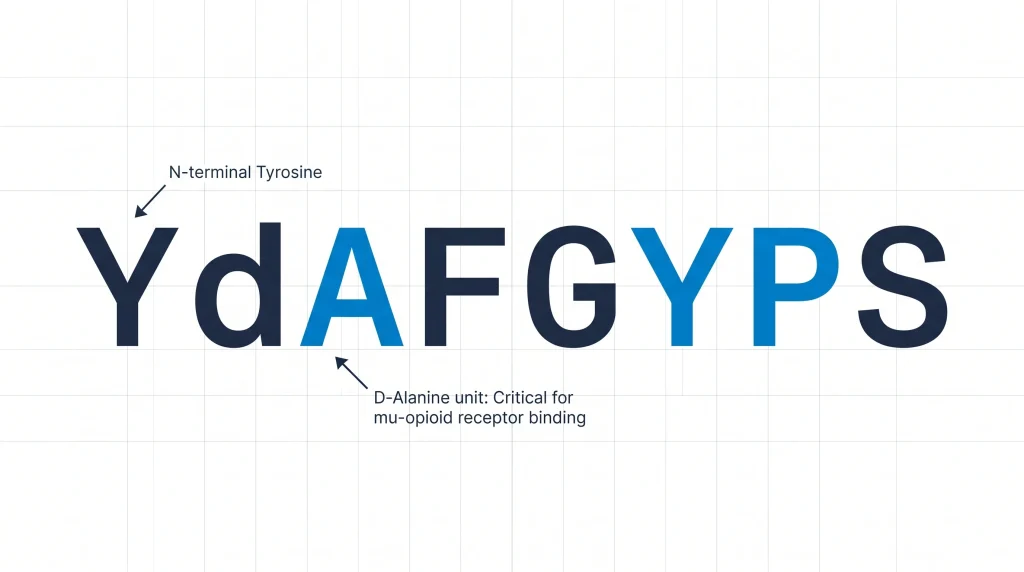
Dermorphin is a 7-unit opioid peptide. Its sequence is Tyr-D-Ala-Phe-Gly-Tyr-Pro-Ser-NH2. The D in D-Ala stands for D-alanine, a mirror-image form of the amino acid alanine. This D-form is rare in natural peptides. Most natural proteins use only L-amino acids.
Dermorphin was first found in the skin of Phyllomedusa frogs, a genus of tree frogs from Central and South America. The skin of these frogs produces a range of bioactive peptides. These peptides have been studied in opioid, germ-active, and heart research. Dermorphin is the most studied MOR-binding peptide from this frog genus.
How Does Dermorphin Bind Opioid Receptors in Studies?
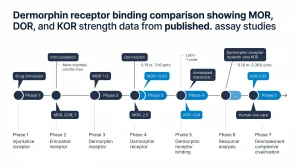
Opioid receptors include three main types: mu (MOR), delta (DOR), and kappa (KOR). Dermorphin has high binding strength and focus for MOR over DOR and KOR in binding assay formats. MOR binding is measured in radioligand assays using brain tissue or cell lines that express the receptor.
According to research in NCBI (2019), dermorphin shows higher MOR strength than morphine in standard binding assays. The D-alanine unit plays a role in this high strength by allowing the peptide to adopt a stable shape for MOR binding. Researchers use dermorphin in these assays to study MOR binding and to compare novel opioid research compounds.
How Does Dermorphin Compare to Morphine in Research?
Both dermorphin and morphine are MOR agonists studied in receptor binding and animal model research. Dermorphin is a peptide; morphine is an alkaloid. These are different chemical classes, which is one reason research teams use both to study MOR research.
Binding studies have shown dermorphin has higher MOR focus than morphine in some assay formats. Animal model studies have compared their effects on pain signals and receptor pathway changes. These are research data in model systems, not clinical outcome data. Researchers can browse brain and CNS peptides for related compounds used in neurological assays.
What Is the D-Amino Acid Structure in Dermorphin?
Most natural peptides contain only L-amino acids. Dermorphin contains one D-amino acid: D-alanine at position 2 of the sequence. D-amino acids are mirror images of their L-forms. The enzymes that break down peptides, called enzymes, do not efficiently cleave D-amino acid bonds. This makes dermorphin more stable in cell fluid than a fully L-form opioid peptide.
The D-amino acid structure also aids MOR binding by creating a stable loop shape in the peptide. Research teams have used dermorphin’s D-Ala unit as a guide for designing synthetic opioid research compounds with similar strength. BPC-157 and other stable research peptides are studied for their own bond-strength features in separate model systems.
What Animal Models Have Used Dermorphin Research?
Dermorphin has been used in rodent pain models to study opioid receptor pathways. These models measure how compounds affect pain signals in the nervous system. Research has also used dermorphin in spinal cord models, where MOR density is high.
According to research in PubMed (2020), dermorphin produced measurable changes in pain signals markers in rodent spinal models. The compound has also been used in brain flow studies to map MOR spread in rodent brain tissue. These findings are published in receptor research literature and are cited here for research context only.
What Is the Regulatory Status of Dermorphin?
Dermorphin is listed as a banned substance in equine sports by the FEI (Federation Equestre Internationale). It has been detected in horse doping cases because of its MOR action in animal models. In research settings, dermorphin is handled as a controlled research compound with appropriate lab protocols.
Dermorphin is not an FDA-approved drug. It is a research tool for studying opioid receptor research. Researchers working with dermorphin should follow their institution’s compound handling protocols and any local regulations. Dermorphin is for lab research use only, not for human or clinical use.
How Are Dermorphin Derivatives Used in Research?
Researchers have created synthetic variants of dermorphin to study which parts of the sequence control MOR binding. Changes to the D-Ala unit, the N-terminal tyrosine, or the C-terminal amide group have been tested in receptor assays to map the binding needs.
These variant studies use the parent dermorphin sequence as a reference point. Binding data from each variant is compared to dermorphin’s MOR strength baseline. This approach helps researchers map which structural features drive receptor binding. Researchers can shop research peptides and source dermorphin for use in receptor binding studies
Frequently Asked Questions
What is dermorphin used for in research?
Dermorphin is used in opioid receptor research as a MOR-selective binding tool. Researchers use it in binding assays to measure MOR strength. They also use it in animal pain models to study opioid signals and as a reference for opioid peptide work. It is not a drug or clinical compound. It is for lab research use only.
What receptors does dermorphin bind in studies?
Dermorphin binds mu-opioid receptors (MOR) with the highest strength of the three main opioid receptor types. It shows lower binding at delta (DOR) and kappa (KOR) receptors in standard binding assays. This MOR focus makes dermorphin a useful reference compound for receptor research that needs to isolate MOR action from other receptor types.
How does dermorphin compare to morphine in receptor binding?
Both compounds bind MOR in research assays but differ in chemical structure. Dermorphin is a peptide; morphine is an alkaloid. Binding studies show dermorphin has higher MOR focus than morphine in some assay formats. These are in vitro data from receptor binding studies and do not represent clinical outcome data.
Is dermorphin found in nature?
Yes. Dermorphin was first found in the skin of Phyllomedusa frogs in South America in 1981. It is one of the few natural opioid peptides to contain a D-amino acid (D-alanine). This D-amino acid feature is rare in nature. It gives dermorphin strength against enzyme breakdown in cell fluid studies.
What makes dermorphin’s D-amino acid structure notable in research?
The D-alanine at position 2 of dermorphin’s sequence resists enzyme breakdown. Standard enzymes cleave L-amino acid bonds but not D-amino acid bonds efficiently. This gives dermorphin longer strength in cell and animal studies compared to fully L-form peptides. Research teams have used this strength as a guide for designing synthetic opioid research compounds.
What animal models have been used in dermorphin research?
Dermorphin has been used in rodent spinal cord models, brain flow studies, and pain signals assays. These models use the compound to map MOR spread in tissue and study how MOR binding changes pain-related signal output. All results are from research models and are not clinical data.
What is the regulatory status of dermorphin in research settings?
Dermorphin is listed as a banned substance by equine sports authorities due to MOR action in horse models. In research settings, it is handled as a controlled research compound subject to lab protocols. It is not FDA-approved. Dermorphin is for lab research use only, not for human or clinical use.
Where can researchers source dermorphin?
Next Level Pharm stocks dermorphin verified to >=99% purity via HPLC and mass spectrometry on every batch. Each order includes a COA with lot number and purity data. Dermorphin ships lyophilized for stable room-temperature delivery within the USA. Researchers can confirm purity on each lot before beginning their study.
Summary
Dermorphin research covers a natural opioid peptide found in South American frog skin in 1981. It binds mu-opioid receptors with high strength and focus in receptor assay formats. Its D-alanine unit gives it strength against enzyme breakdown, which makes it a useful tool in cell and animal studies.
Researchers have used dermorphin in binding assays, animal pain models, and structure-to-effect studies comparing it to morphine. These studies are published in opioid receptor journals and provide a reference dataset for MOR research.
It is not intended for human use or clinical use of any kind. COA-verified purity data is available on every lot.
What Should You Do Next?
Review the original dermorphin isolation study at PubMed (PMID 6890469) for the full receptor strength data. Read the MOR binding review at NCBI (PMID 28800754) for the comparative binding assay results. When sourcing dermorphin for receptor research, shop research peptides and verify the COA on every lot.
Related research: CNS bioregulator research, brain peptides compared, and nootropic peptides research.
People Also Read
About the Author
Next Level Pharm Research Team
Alex M covers peer-reviewed findings in peptide science for Next Level Pharm, a US-based supplier of research-grade peptides verified to >=99% purity via HPLC and mass spectrometry on every batch.
Disclaimer: The information provided on this page is for educational and research purposes only. Next Level Pharm’s products are intended for lab research use only. They are not intended for human consumption, diagnostic, therapeutic, or medicinal purposes. This content does not constitute medical advice. Always consult a licensed healthcare professional before making any health-related decisions.