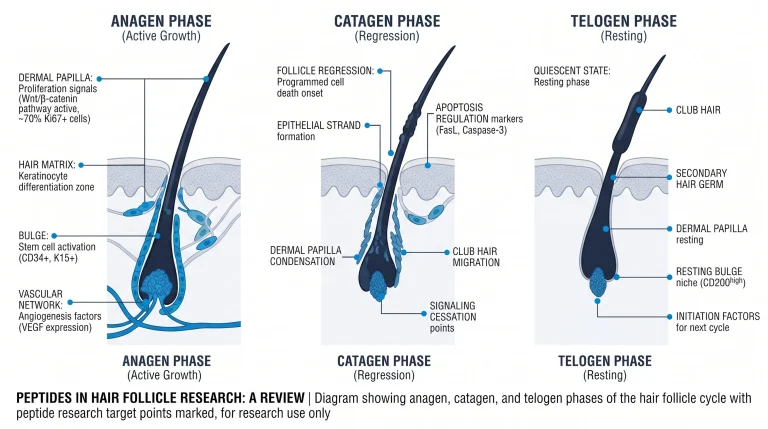
Peptides in Hair Follicle Research: A Review
Peptide hair follicle research maps how compounds like GHK-Cu affect the anagen phase and follicle stem cell activity in lab models. COA-verified for labs.
Peptide hair follicle research maps how compounds like GHK-Cu affect the anagen phase and follicle stem cell activity in lab models. COA-verified for labs.
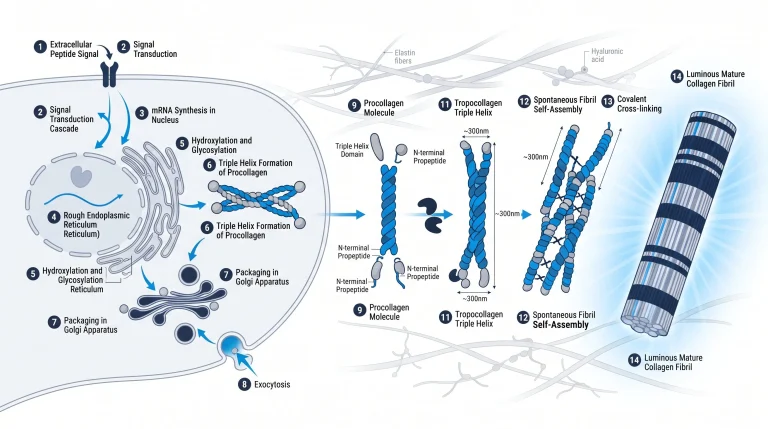
Collagen peptide synthesis research maps how peptides signal fibroblasts. Studies on GHK-Cu show effects on COL1A1 gene expression in lab models.
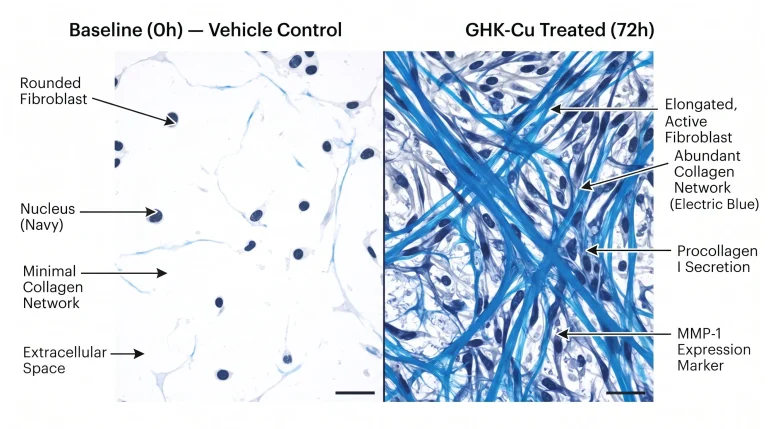
GHK-Cu skin research: collagen synthesis, fibronectin, and keratinocyte gene markers in cell and animal models. No human outcomes are claimed.
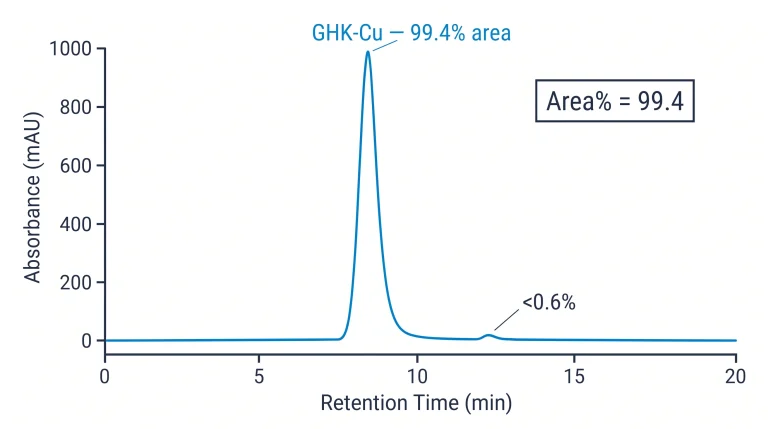
How to read a GHK-Cu COA: what HPLC peak area, mass spec molecular weight, and lot number data mean for research-grade copper peptide.
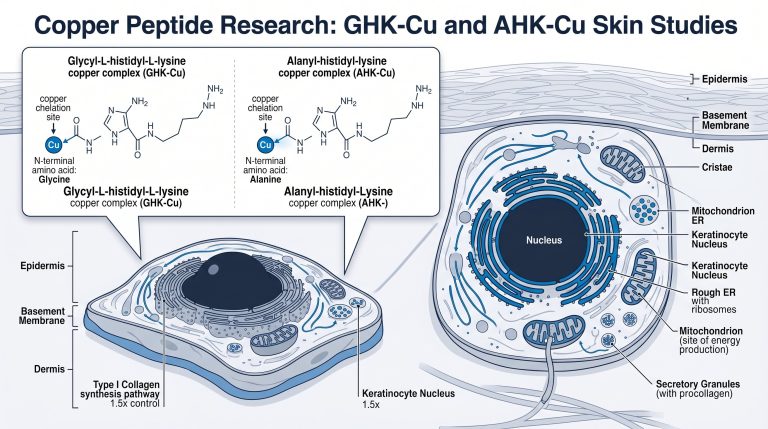
Copper peptide research on GHK-Cu and AHK-Cu covers fibroblast cell models, SPARC pathways, SOD activity, and collagen biomarker assays.
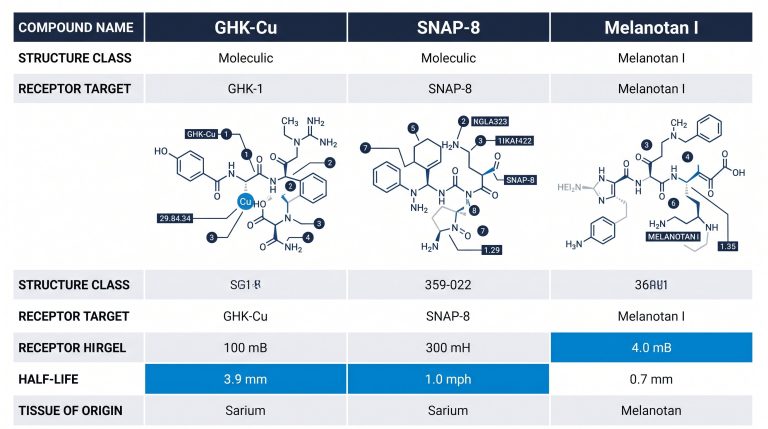
Compare GHK-Cu, SNAP-8, and Melanotan I as research-grade skin peptides. Lab data on collagen output, nerve signals, and pigment control in cell models.
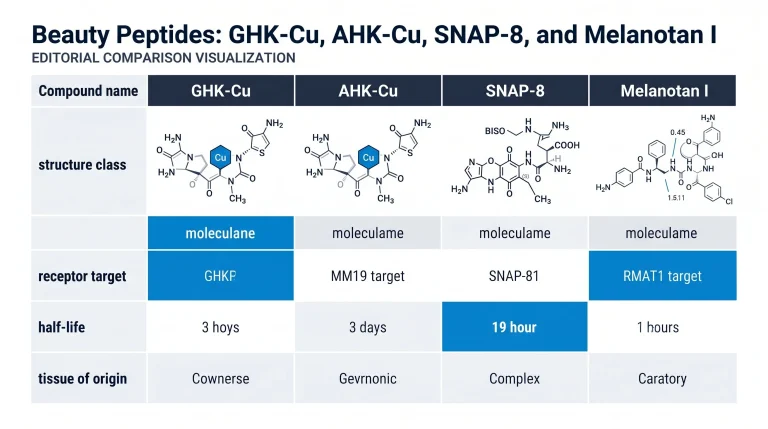
Beauty peptides research compares GHK-Cu, AHK-Cu, SNAP-8, and Melanotan I on their mechanisms, skin study data, and structural features.
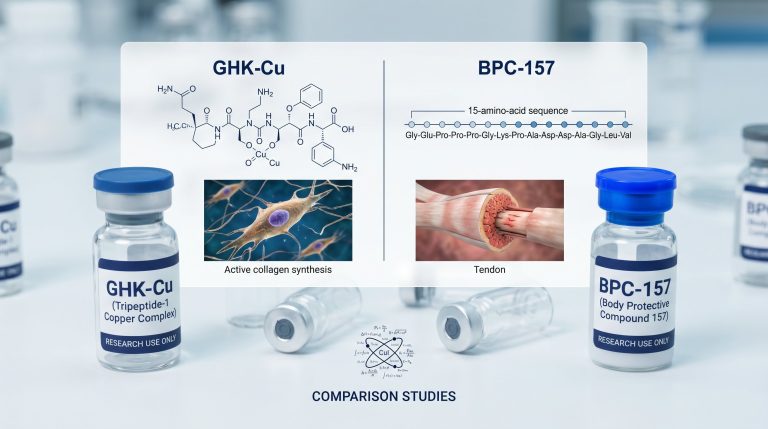
GHK-Cu vs BPC-157 research comparison: peptide structure differences, extracellular matrix findings, tissue study data, and sourcing standards for labs.
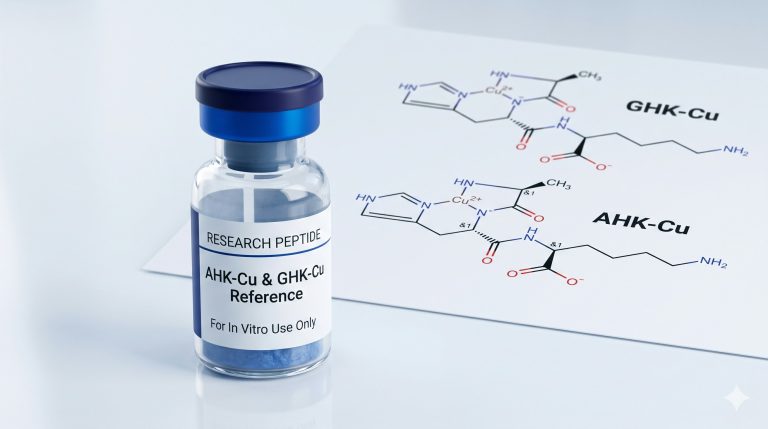
AHK-Cu research: how this copper peptide binds to fibroblast cells, affects hair follicle models, and compares to GHK-Cu in published studies.
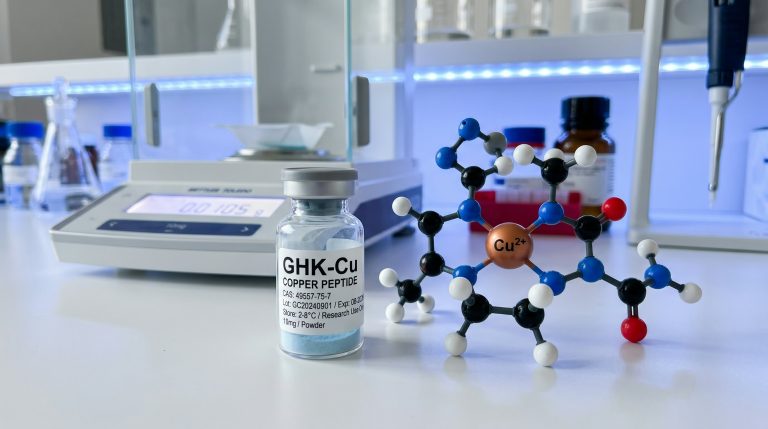
GHK-Cu research explained: gene expression, collagen synthesis, hair follicle, and antioxidant pathway findings. What peer-reviewed studies show.