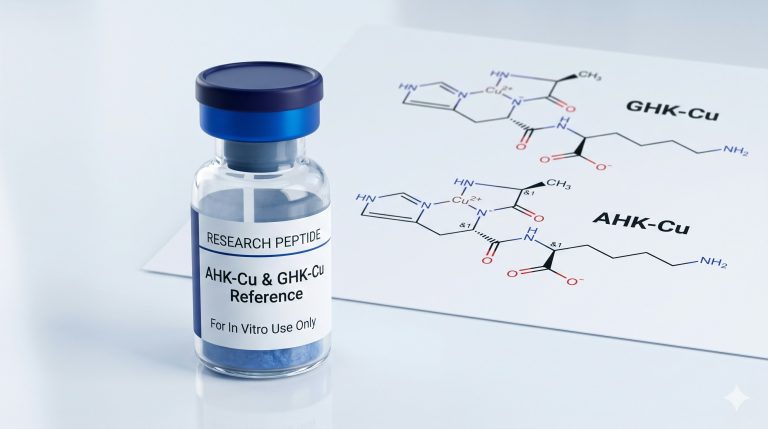
AHK-Cu Research: Copper Peptide Mechanisms and Study Findings
AHK-Cu research: how this copper peptide binds to fibroblast cells, affects hair follicle models, and compares to GHK-Cu in published studies.
Read more
AHK-Cu research: how this copper peptide binds to fibroblast cells, affects hair follicle models, and compares to GHK-Cu in published studies.
Read more
DSIP research explained: nonapeptide structure, EEG sleep cycle findings, cortisol modulation data, half-life instability, and sourcing standards for labs.
Read more
Ipamorelin explained: ghrelin receptor activation, selective GH release, animal study data, and sourcing quality standards for research use.
Read more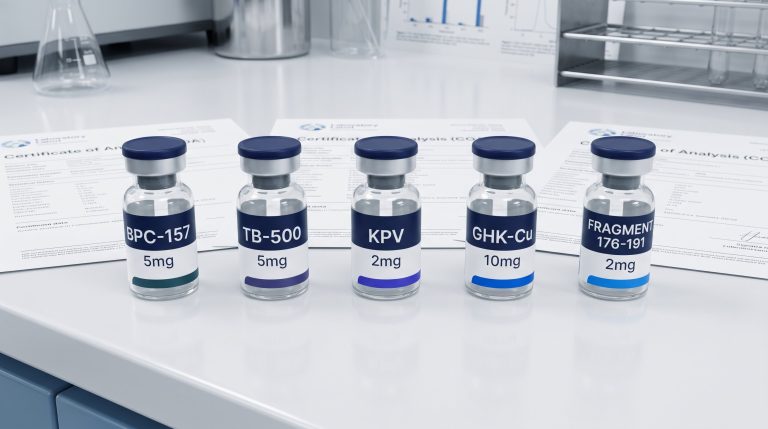
Recovery peptides comparison: BPC-157, TB-500, KPV, and GHK-Cu research mechanisms, study model findings, and COA-verified lab-grade sourcing guide.
Read more
KPV peptide research explained: alpha-MSH C-terminal fragment, NF-kB pathway inhibition, intestinal colitis model findings, and sourcing standards.
Read more
Epithalon research explained: telomere biology, pineal gland function, lifespan studies in animal models, and sourcing standards for researchers.
Read more
AICAR research: AMPK activation mechanisms, ZMP conversion, metabolic and exercise-mimetic study findings, and COA-verified lab-grade sourcing.
Read more
Peptide purity testing explained: how RP-HPLC measures purity, what mass spectrometry confirms, why both are required, and what a COA must contain.
Read more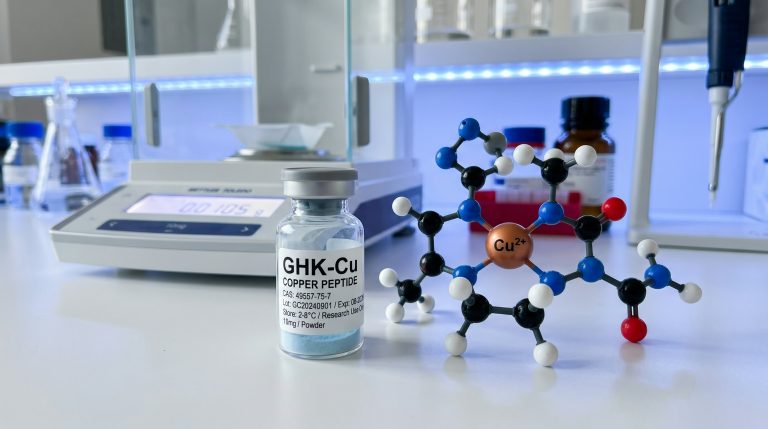
GHK-Cu research explained: gene expression, collagen synthesis, hair follicle, and antioxidant pathway findings. What peer-reviewed studies show.
Read more
Peptide COA explained: what a certificate of analysis must include, how HPLC and mass spec data appear, and what lot-specific records provide for research.
Read more