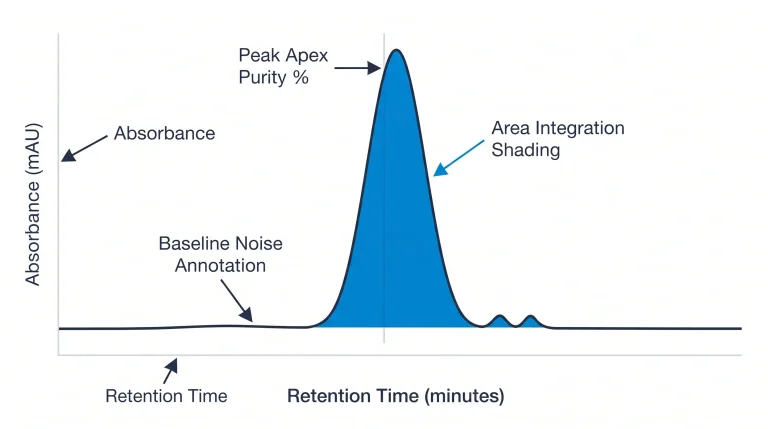
How to Read an HPLC Chromatogram for Peptides
An HPLC chromatogram plots retention time vs detector response. The main peak area percent gives purity. Learn to read peptide COA chromatograms.
Read more
An HPLC chromatogram plots retention time vs detector response. The main peak area percent gives purity. Learn to read peptide COA chromatograms.
Read more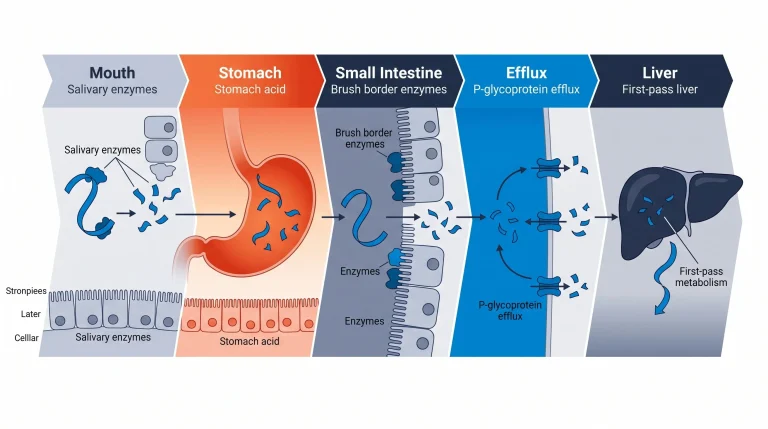
Oral peptide bioavailability is the fraction of an orally administered peptide that reaches systemic circulation unchanged.
Read more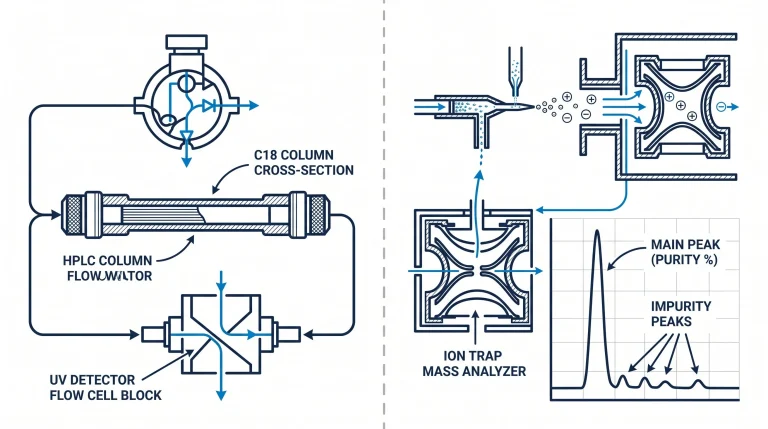
HPLC measures peptide purity and mass spectrometry confirms molecular identity. Both tests are required for a valid research peptide COA.
Read more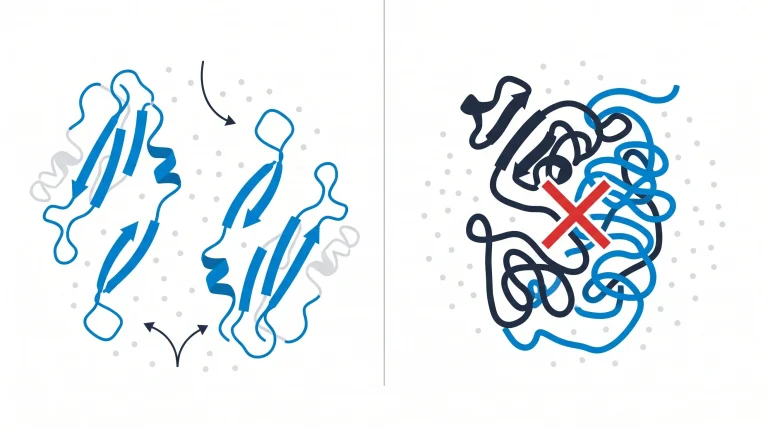
Peptide compatibility mixing is the chemical process of combining multiple distinct peptide molecules into a single solution to assess their stability.
Read more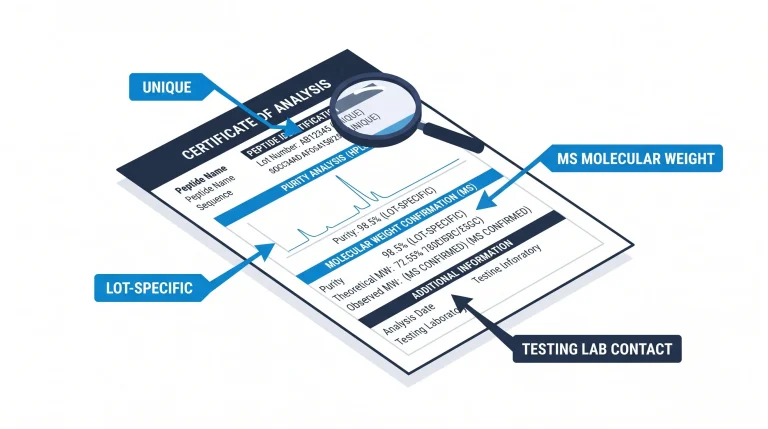
A lot-specific COA links a unique batch number to the HPLC and mass spec test data for that exact vial, enabling full batch traceability
Read more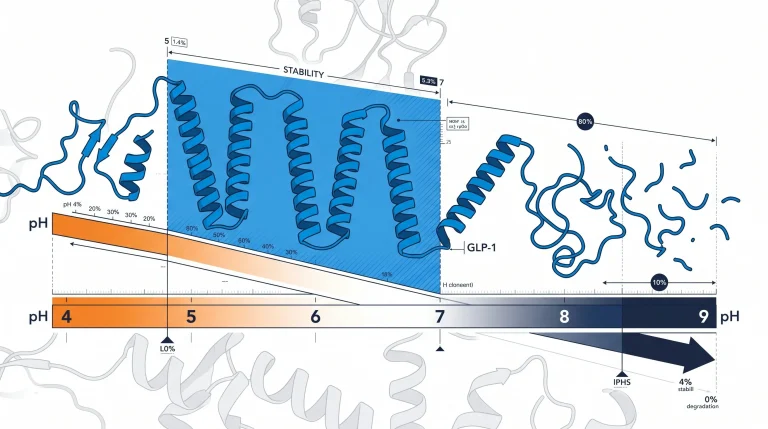
GLP-1 peptide stability is the ability of a glucagon-like peptide-1 analog to maintain its chemical structure, purity, and biological activity under.
Read more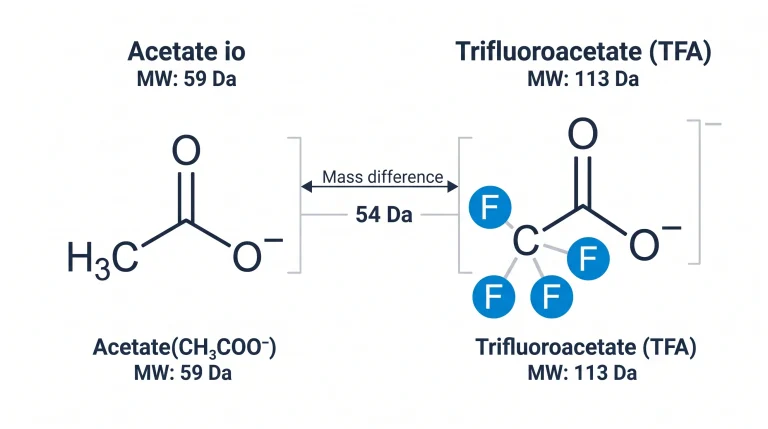
Acetate and TFA are the two most common counterions in research peptides. TFA adds more non-active mass and may lower pH in sensitive cell assays.
Read more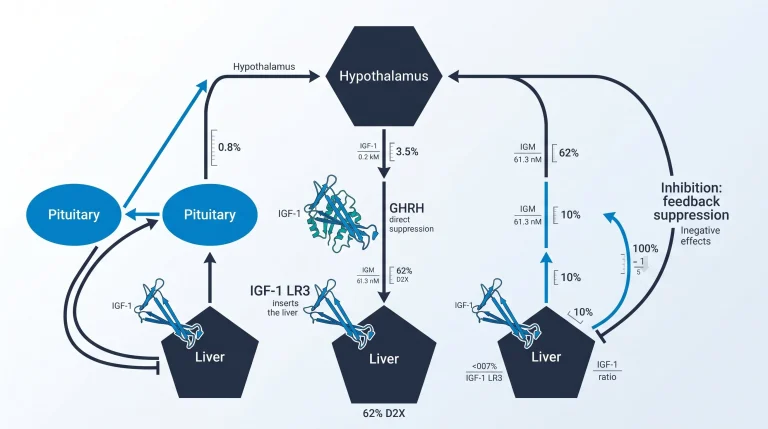
IGF-1 LR3 is a synthetic analog of human Insulin-like Growth Factor-1, modified to resist binding by inhibitory proteins for extended systemic duration.
Read more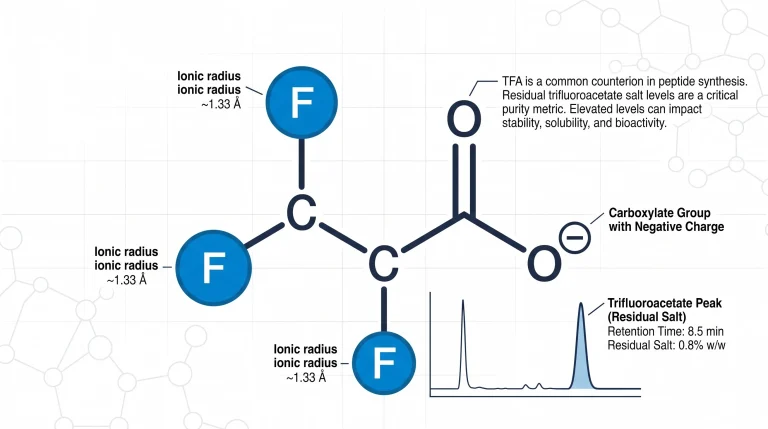
TFA (trifluoroacetic acid) is a standard counterion from HPLC peptide purification. It adds 5 to 15 percent non-active mass to labeled vial weight.
Read more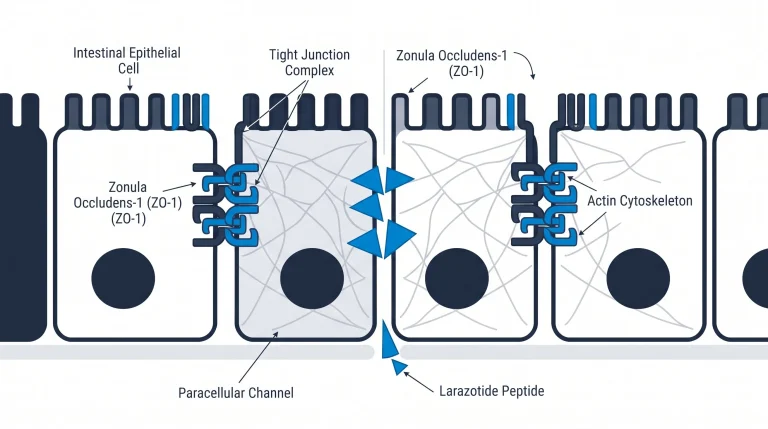
Larazotide is a synthetic octapeptide that regulates tight junctions, which are protein complexes controlling permeability between cells.
Read more