Good Laboratory Practice in Peptide Research: A GLP Compliance Guide

Last updated: October 2026
A good laboratory practice (GLP) is a set of rules for labs that run safety tests on new compounds. These rules make sure the data from each study is honest, complete, and easy to check. According to NIH (2024), GLP covers how labs store data, train staff, and track every step of a study.
Next Level Pharm provides lab-grade peptides for these studies. Every batch goes through HPLC (high performance liquid chromatography) and mass spec testing. The last 100 batches hold a 99.4% average purity.
Independently verified compounds with known purity help laboratories maintain stable test conditions. This cuts the risk of stray variables that could skew results. The sections below explain how GLP works in peptide research.
Key Takeaways
- Mandatory Quality Systems: GLP is a formal set of guidelines that keeps lab data reliable. It governs safety tests used for later review.
- Core Research Oversight: Each study has a Study Director and a Quality Assurance Unit (QAU). These roles enforce strict written procedures called SOPs.
- Strict Record Keeping: Clear records prove every step of a trial is correct. This lets any reviewer trace the full history of a study.
- Purity Checks: Labs confirm that the test compound matches its expected profile. HPLC and mass spec tests support clean lab work.
Laboratories that follow these guidelines produce more reliable data. Stronger data sets support the goals of ongoing research.
How Does GLP Apply to Peptide Research?
GLP sets the rules for safety tests that support future research filings. This system keeps all lab data honest and easy to repeat. Strict oversight helps labs meet the bar for peer review.
The Study Director runs the full project. They check that the team follows the study plan at every step. A Quality Assurance Unit (QAU) audits data logs to confirm proper methods.
According to PubMed (2009), these layers of checks protect the quality of collected data. This approach helps laboratories maintain the accuracy needed for detailed investigation.
What Is the Role of the Study Director in GLP?
The Study Director is the single point of control for a GLP study. This person holds full charge of the design, conduct, and reporting of the work. They make sure the project stays within all rules for lab safety and data quality.
The Study Director approves the final study plan. They check that all steps match the plan to prevent errors or bias. If any issue comes up, they log it to keep the work valid.
The Study Director signs the final report to confirm it is accurate. This step proves that the research follows all required standards.
What Documentation Does GLP Require?
GLP requires full records of every step in a study. Labs must keep a master schedule that lists all active projects. Each phase of a test must be logged in real time with raw data for every reading.
These logs form the base of the final study report. Equipment logs and staff training files must also prove the lab was in good shape. According to Peptides (2024), all files must stay secure and easy to access for the time that regulators require.
Next Level Pharm provides COA-verified research peptides. Every lot is tested by HPLC and mass spec.
How Is GLP Different From GMP or GCP?
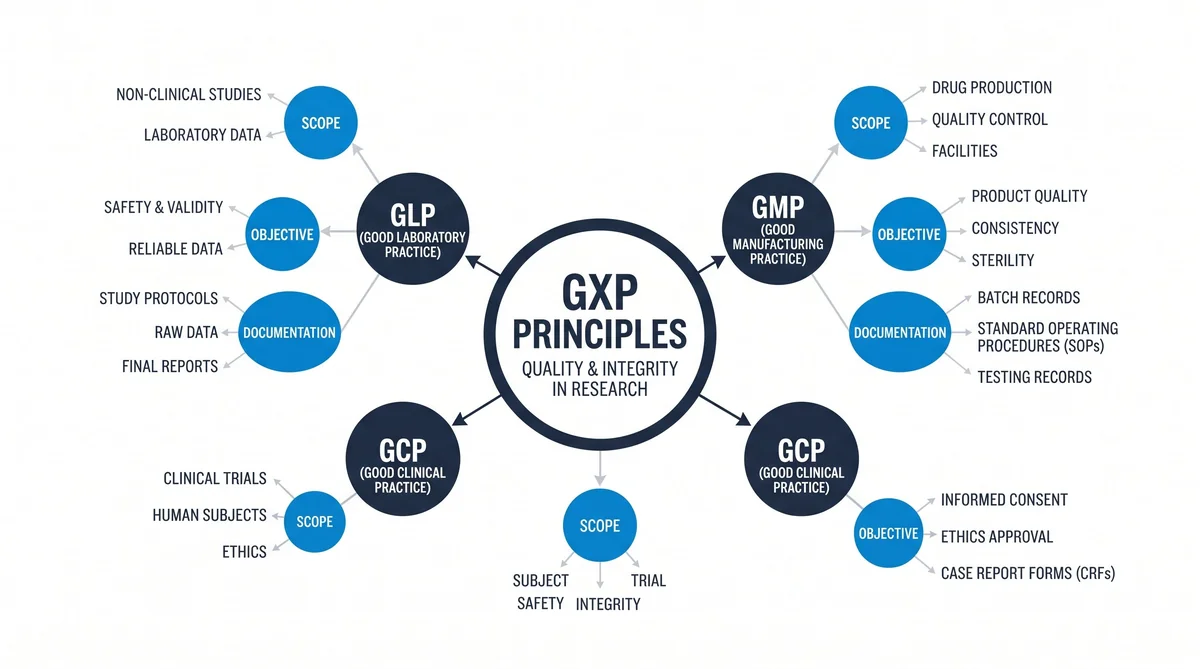
GLP, GMP, and GCP are three separate quality systems. GLP (Good Laboratory Practice) governs nonclinical lab studies. GMP (Good Manufacturing Practice) covers how products are made.
GCP (Good Clinical Practice) sets rules for human trials. Each system serves a different step in the research cycle. They do not overlap.
| Feature | GLP | GMP | GCP |
|---|---|---|---|
| Scope | Lab studies | Product making | Human trials |
| Goal | Data integrity | Batch consistency | Subject safety |
| Key role | Study Director | Quality control | Ethics board |
COA-verified research peptides are available for lab teams. Every lot is tested by HPLC and mass spec.
Why Is GLP Important for Regulatory Submissions?
GLP is key for filings with agencies like the FDA. Regulators need safety data from GLP studies to approve an IND (Investigational New Drug) application. This step allows research to advance.
Without GLP data, a New Drug Application (NDA) faces heavy scrutiny. Regulators check whether the lab’s data can be fully traced back to raw results. Strict record keeping lowers the risk of rejection for test compounds.
By keeping detailed logs, labs build the technical base for future steps. Following these rules supports the path from lab bench to review stage.
Frequently Asked Questions
What does GLP compliance require for peptide research?
GLP requires labs to follow strict rules that keep data honest and easy to repeat. All phases of research must run under a formal quality system. This covers staff training records, equipment checks, and secure data storage.
The goal is to let any reviewer rebuild the full study at any time. This proves that each finding is based on sound methods (NIH, 2024).
How does GLP differ from GMP in laboratory requirements?
GLP focuses on the quality of data from lab studies. GMP focuses on how products are made. GLP governs the steps, records, and actions of research teams.
GMP ensures that every batch of a product has the same purity and safety. GLP tracks lab methods and notes, while GMP checks the chemical process and packaging for batch uniformity (USP, 2023).
What documentation does GLP require for peptide studies?
GLP requires records for every part of a study, from the design phase to the final report. This covers the approved study plan, raw data sheets, and equipment logs. Any changes made during the study must also be noted.
Labs must keep these files safe and easy to access. These records must allow a full rebuild of all test steps and results (PubMed, 2009).
What facility standards does GLP specify for research labs?
GLP says that labs must be big enough and designed well for proper testing. Different study parts need physical separation to stop cross-contamination. Labs must track and record room conditions, including temperature and humidity levels.
These checks ensure that the setting does not affect the test compound or the data. Federal regulatory standards outline these rules in detail (NIH, 2024).
How is GLP compliance verified for a peptide research study?
A Quality Assurance Unit (QAU) or a regulatory body runs audits to verify GLP compliance. These audits check the study plan, the actual tests, and the final data reports. Agencies like the FDA also inspect the lab itself.
They review the facility, staff records, and all files. These checks confirm that the lab meets all legal rules for data submission (PubMed, 2009).
What are Standard Operating Procedures (SOPs) in GLP?
Standard Operating Procedures (SOPs) are written guides that explain how to do routine lab tasks. They ensure every team member follows the same steps. This cuts errors and keeps results consistent.
Under GLP, SOPs must be approved by management and available to all staff. Labs must also review them on a regular basis to match current methods and tools (USP, 2023).
What is a Quality Assurance Unit (QAU) under GLP?
The Quality Assurance Unit (QAU) is a separate group in the lab that watches over all GLP work. Its main job is to confirm that the study plan is followed. It also checks that data is logged the right way.
The QAU reports to management, not to the study team. It runs regular audits to spot problems early, which keeps the research honest (NIH, 2024).
Can academic labs be GLP compliant?
Yes. Academic labs can follow GLP if they set up the right systems and oversight roles. Many academic labs focus on early research that does not need formal GLP rules.
But labs that want to support regulatory filings can adopt these standards. This requires a formal QAU and strict SOPs for all test steps. The shift takes time but is possible with the right plan (PubMed, 2009).
What happens if a study is found to be non-compliant with GLP?
If a study breaks GLP rules, agencies like the FDA may reject the data. Non-compliance raises doubts about data accuracy and reliability. In most cases, the lab must redo the full study under proper GLP conditions.
This adds significant time and cost to the project. Valid findings require strict adherence to all GLP standards throughout the study period (USP, 2023).
What is the role of the Study Director in a GLP study?
The Study Director is the lead scientist who runs the full study from start to finish. This person approves the study plan and makes sure all staff know the steps. They manage the timeline and check that data is recorded the right way.
At the end, they sign the final report to confirm the work is valid. This role is key for the quality expected in GLP research (NIH, 2024).
Summary
Good laboratory practice (GLP) is the quality system that governs nonclinical lab studies. It ensures that every data point is honest, complete, and easy to trace. Key roles like the Study Director and QAU keep strict oversight from start to finish.
Labs that follow GLP produce cleaner data sets. Proper records, trained staff, and verified equipment all play a part. These standards form the base for any future regulatory filing.
Researchers can browse COA-tested research peptides at the Next Level Pharm shop. Every vial ships with full lot traceability.
What Should You Do Next?
Confirm that your study design lists the peptide concentration, purity level, and test model for each assay. Review the lot-specific COA for each compound to verify that purity meets the 99% standard or higher.
Next Level Pharm stocks COA-verified research compounds for lab teams that need consistent purity across batches. Browse research peptides to source materials for your next study.
Browse recovery peptides for COA-verified research compounds.
Browse fitness peptides for COA-verified research compounds.
People Also Read
About the Author
Next Level Pharm Research Team
The Next Level Pharm research team is made up of biochemists and lab scientists. Their goal is to give researchers the highest-purity, COA-tested compounds on the market. Every batch is HPLC and mass spec confirmed before dispatch.
Disclaimer: The information provided on this page is for educational and research purposes only. Next Level Pharm’s products are intended for laboratory research use only. They are not intended for human consumption, diagnostic, therapeutic, or medicinal purposes. This content does not constitute medical advice. Always consult a licensed healthcare professional before making any health-related decisions.