
Retatrutide vs Tirzepatide: Triple vs Dual Agonist Research

Last updated: July 2026
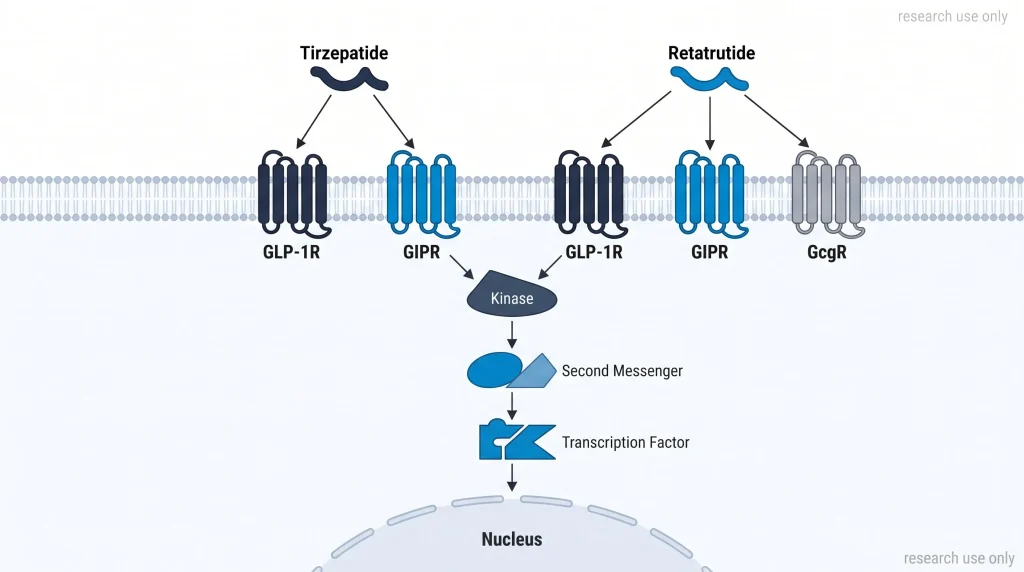
A retatrutide vs tirzepatide comparison studies two one-molecule peptides used in metabolic research. Retatrutide is a triple agonist that binds GLP-1, GIP, and glucagon receptors. Tirzepatide is a dual agonist that binds GLP-1 and GIP receptors. According to PubMed (2023), retatrutide has been studied in Phase 2 metabolic research for its triple receptor binding. This makes it one of the most studied peptides in triple receptor agonism research.
Next Level Pharm is a US-based supplier of research-grade peptides. All products are HPLC and mass spectrometry verified to ≥99% purity. COA documentation is included on every batch. Researchers can browse metabolic research peptides for retatrutide and related analogs.
The two peptides share GLP-1 and GIP receptor binding. The key difference is retatrutide’s glucagon receptor (GCGR) activity. This extra binding pathway is the focus of most retatrutide vs tirzepatide comparison research. Studies examine how the GCGR signal changes metabolic outcomes vs. dual agonism alone.
Key Takeaways
- Receptor Targets: Retatrutide binds GLP-1R, GIPR, and GCGR. Tirzepatide binds GLP-1R and GIPR only.
- Phase Data: Retatrutide has been studied in Phase 2 metabolic research for its triple receptor binding.
- Glucagon Research: GCGR binding in retatrutide is studied for liver fat and energy research in animal models.
- Regulatory Status: Tirzepatide is further along in the research process than retatrutide, which is in Phase 3 studies as of 2026.
- GI Effects: Both analogs carry gut-related effects in research studies, including nausea and gut motility changes.
Scientists use these two analogs side by side to study how adding glucagon receptor binding changes metabolic outcomes. This is a key question in triple agonist research. The table below compares their main features.
What Is the Primary Difference Between the Two?
The key difference is the number of receptor targets. Tirzepatide is a dual agonist. It binds GLP-1R and GIPR in one molecule. This was the first approved drug of its class. It has been studied for how combined GLP-1 and GIP binding affects metabolic signaling in animal models.
Retatrutide adds a third receptor. It also binds the glucagon receptor (GCGR). The GCGR signal is studied for energy use and liver fat. Adding this pathway is the core variable in retatrutide vs tirzepatide research. Scientists use the comparison to isolate the effect of GCGR binding on top of dual agonism.
How Do Their Receptor Targets Compare?
GLP-1 receptor binding is shared by both. GLP-1R signals glucose-linked insulin release from beta cells. It also suppresses glucagon from alpha cells. GIP receptor binding adds a second signal that may work with GLP-1R in the pancreas and fat tissue.
The glucagon receptor is the unique target of retatrutide. GCGR binding is studied for its role in liver fat and energy use. According to PubMed (2021), dual agonism has been linked to greater metabolic effects than GLP-1R alone. Retatrutide adds a third layer to this by also targeting GCGR. This makes it a useful tool for studying triple-pathway metabolic signaling.
How Have the Two Been Studied in Trials?
Phase 2 research on retatrutide at Eli Lilly has characterized its triple receptor binding. According to PubMed (2023), the added glucagon receptor pathway is the focus of this metabolic research. This design differs from any dual agonist studied to date.
For tirzepatide, SURMOUNT-1 Phase 3 research has characterized its dual receptor binding. According to PubMed (2022), tirzepatide is used as a dual agonist reference in metabolic research. Both serve as reference benchmarks in retatrutide vs tirzepatide studies.
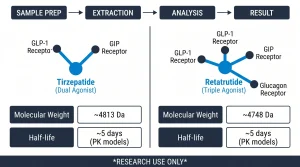
| Feature | Retatrutide | Tirzepatide |
| Receptor targets | GLP-1R, GIPR, GCGR | GLP-1R, GIPR |
| Agonist type | Triple | Dual |
| Distinct receptor | Glucagon (GCGR) | GLP-1R and GIPR only |
| FDA status | Investigational (Phase 3) | Later research stage |
| Developer | Eli Lilly | Eli Lilly |
Does GCGR Activation Add Unique Research Targets?
Yes. The glucagon receptor is a separate signaling path from GLP-1R and GIPR. GCGR binding has been studied for its role in liver fat. Research models show GCGR signals hepatic fat use and raises energy output in animal assays. This is distinct from the insulin and beta cell signals of the other two receptors.
Studies on retatrutide also examine hepatic steatosis (liver fat buildup). According to PubMed (2023), retatrutide has been studied for effects on liver fat markers in research models. This liver research angle is not present in tirzepatide studies, which focus on the GLP-1R and GIPR pathways only.
Researchers can view retatrutide for COA-confirmed research use.
What Are Their Current Regulatory Statuses?
Tirzepatide is further along in the research and regulatory process than retatrutide. It serves as a dual agonist reference compound in metabolic research. Researchers use it as a dual agonist benchmark when comparing to newer triple agonist compounds.
Retatrutide remains in active research as of mid-2026. It is in Phase 3 trials. Researchers use Phase 2 data to model how triple agonism differs from dual. Both peptides are studied as research tools. Neither is a substitute for the other in a research context. The regulatory status difference is a factual marker, not an efficacy claim.
How Do Their Adverse Effect Profiles Compare?
Both analogs produce gut-related effects in research studies. These include nausea, reduced gut motility, and loose stools. These effects are well-documented in the literature. They are studied in animal models to map how each receptor contributes to gut signaling.
Retatrutide’s GCGR binding may add heart rate effects not seen with tirzepatide. Research monitors heart rate in animal models during retatrutide studies. This is a standard safety check in triple agonist research. Tirzepatide studies also monitor heart rate but as part of GLP-1R cardiovascular research only.
Researchers studying GLP-1 receptor mechanisms may also find eloralintide relevant — it is a research-grade GIP/GLP-1 co-agonist analog available as a COA-verified, lyophilized research peptide.
Frequently Asked Questions
What is the difference between retatrutide and tirzepatide?
Retatrutide and tirzepatide are both one-molecule peptides studied in metabolic research. The main difference is receptor targets. Tirzepatide binds GLP-1R and GIPR only. Retatrutide also binds the glucagon receptor (GCGR). This extra binding pathway is the key variable in retatrutide vs tirzepatide research. Studies examine how GCGR activation changes outcomes on top of dual agonism. Both peptides are developed by Eli Lilly and are studied in similar metabolic model settings.
How does retatrutide’s triple agonist mechanism differ from tirzepatide’s dual agonist?
Triple agonism adds GCGR binding on top of GLP-1R and GIPR. This third pathway signals energy use and liver fat in animal models. Dual agonism targets only GLP-1R and GIP receptor. Research uses side-by-side assays to isolate the GCGR contribution. Scientists compare outcomes when GCGR is present vs. absent to map its specific metabolic role. This is a key method in retatrutide vs tirzepatide comparison studies.
How does the GCGR pathway change retatrutide research profile vs tirzepatide?
Retatrutide has been studied in Phase 2 metabolic research for its triple receptor binding. Tirzepatide is studied as a dual agonist reference. The two compounds are at different research stages, so direct comparison requires caution. Research examines how the GCGR signal in retatrutide changes metabolic signaling. All findings are from animal model research, not clinical claims.
What receptor pathways does retatrutide activate that tirzepatide does not?
Retatrutide activates the glucagon receptor (GCGR). Tirzepatide does not target GCGR. The GCGR pathway signals liver fat use and raises energy output in animal assays. It is also studied for hepatic steatosis effects. This extra binding makes retatrutide useful for studying the metabolic role of glucagon receptor signaling alongside GLP-1 and GIP pathways.
What is the research-grade status of retatrutide vs tirzepatide?
Tirzepatide is further along in the regulatory process than retatrutide, which is in Phase 3 trials as of mid-2026. Retatrutide is in Phase 3 trials as of mid-2026. Neither research-grade compound is intended for human use or as a substitute for any approved medication. Both are studied as research peptides, and neither is a substitute for the other in a laboratory context.
What is a glucagon receptor agonist?
A glucagon receptor (GCGR) agonist is a compound that binds and activates the glucagon receptor. The GCGR is found in the liver, fat tissue, and other organs. GCGR binding signals the liver to release stored glucose and use fat for energy. In research, GCGR agonists are studied for hepatic fat and energy output effects. Retatrutide’s GCGR binding is the key feature that sets it apart from dual agonists like tirzepatide in metabolic research models.
What does unimolecular mean in the context of retatrutide and tirzepatide?
Unimolecular means one single peptide molecule binds multiple receptors. This is different from giving two separate drugs for two separate receptors. Retatrutide and tirzepatide are each one molecule. Each binds two or three receptors through different parts of its structure. This design is studied because it avoids the need for multiple injections. Research examines how a single molecule can activate multiple metabolic pathways at once.
What are common side effects of retatrutide and tirzepatide in research studies?
Both analogs produce gut-related effects in research studies. These include nausea, reduced gut motility, and loose stools. These are well-noted in animal model studies for both compounds. Retatrutide may also show heart rate changes linked to GCGR binding. Researchers monitor these as safety endpoints in animal studies. The profiles are used to compare safety between triple and dual agonism in the retatrutide vs tirzepatide research context.
Which company is developing both retatrutide and tirzepatide?
Eli Lilly and Company is developing both retatrutide and tirzepatide. Tirzepatide is further along in the research and approval process than retatrutide. Retatrutide is in active Phase 3 trials. Eli Lilly uses its experience with tirzepatide to guide retatrutide research design. Both compounds are studied using similar Phase trial structures and animal model protocols.
What is the significance of the GIP receptor for metabolic research?
The GIP receptor (GIPR) is expressed in the pancreas, fat tissue, and brain. GIP binding in the pancreas signals insulin release in a glucose-linked manner. In fat tissue, GIPR binding may affect fat storage and use. Research on tirzepatide showed that adding GIPR to GLP-1R binding improved metabolic outcomes vs. GLP-1R alone. This finding is a key reference in retatrutide vs tirzepatide studies because it shows how each added receptor layer changes the metabolic research model.
Summary
Retatrutide and tirzepatide are one-molecule peptides studied for their roles in metabolic receptor research. Tirzepatide is a dual agonist targeting GLP-1R and GIPR. Retatrutide adds the glucagon receptor as a third target. This extra GCGR binding is the core variable in retatrutide vs tirzepatide comparison studies.
Both have been studied in Phase trials as metabolic research references. Retatrutide’s triple receptor binding and tirzepatide’s dual binding are the key structural variables compared. These profiles are used to study agonist class differences in metabolic research.
COA-confirmed research peptides are on hand for lab use. View tirzepatide and retatrutide product pages for purity and COA data.
What Should You Do Next?
Researchers comparing triple vs dual agonism should use COA-confirmed peptides with lot-to-lot purity data. This ensures clean receptor binding assays across study arms. Next Level Pharm provides ≥99% purity retatrutide and tirzepatide with HPLC and mass spec verification.
Shop research peptides or browse metabolic research peptides for retatrutide, tirzepatide, and related GLP-1 analogs.
People Also Read
- AOD-9604 Research: What Studies Show About This HGH Fragment
- What Makes a Peptide Research Grade? Standards and Testing Explained
About the Author
Next Level Pharm Research Team
Alex M covers peer-reviewed findings in peptide science for Next Level Pharm, a US-based supplier of research-grade peptides verified to ≥99% purity via HPLC and mass spectrometry on every batch.
Disclaimer: The information provided on this page is for educational and research purposes only. Next Level Pharm’s products are intended for laboratory research use only. They are not intended for human consumption, diagnostic, therapeutic, or medicinal purposes. This content does not constitute medical advice. Always consult a licensed healthcare professional before making any health-related decisions.