
CNS Bioregulators: Neural Peptide Research Studies

Last updated: July 2026
A CNS bioregulator is a short peptide studied for effects on gene activity in brain and nerve cells. The CNS (central nervous system) includes the brain and spinal cord. Short peptides act on gene switches inside cells or on receptors on the cell surface. They can change which proteins a cell makes. According to Dolotov et al. (2006) (PMID 17189037), Semax raised BDNF levels in rat hippocampal cells under stress in animal models. All cited data come from cell and animal studies.
Next Level Pharm is a US-based supplier of research-grade peptides. Cortagen, Semax, Selank, and PE-22-28 are available as COA-verified research compounds. Each lot is tested to ≥99% purity by HPLC and mass spec. The average purity across the last 100 batches is 99.4%.
CNS research peptides are not approved drugs. They are studied only in cell and animal models. All findings cited here come from such models.
Key Takeaways
- Cortagen Is a CNS Bioregulator: Cortagen is a 4-amino acid Khavinson bioregulator (Ala-Glu-Asp-Pro). It is linked to brain tissue. It is studied for gene activity changes in neural cell models.
- Semax Is Studied for BDNF Signals: Semax is a 7-amino acid ACTH analog. In cell and animal models, it is studied for effects on BDNF (brain-derived neurotrophic factor) gene expression.
- Selank Acts on GABA Pathway Markers: Selank is a 7-amino acid tuftsin analog. It is studied for effects on GABA (gamma-aminobutyric acid) receptor markers in nerve cell models.
- PE-22-28 Targets the TrkB Receptor: PE-22-28 is a 7-amino acid peptide. It is studied as a BDNF mimetic that binds the TrkB receptor on nerve cells.
- All Findings Come from Cell and Animal Models: Human clinical data have not been established. These compounds are for lab research use only.
Researchers use these peptides to study how short amino acid chains change gene activity in neural cells. The results guide further CNS biology research.
What Are CNS Bioregulators?
A CNS bioregulator is a peptide studied for effects on brain or nerve cell gene activity in cell models. These compounds are tested in neural cell lines and rodent models. They are not approved drugs.
The CNS (central nervous system) controls thought, movement, and body signals. Key cells include neurons (nerve signal cells) and glial cells (support cells). These cells respond to chemical signals. Peptides can bind surface receptors on neurons or enter cells to act on gene switches.
Gene switches control which proteins a cell makes. Two key switches in neural research are CREB (a gene activity promoter) and NF-kB (an inflammation switch). Short peptides change these switches in cell models.
What Is Cortagen and How Is It Studied?
Cortagen is a 4-amino acid peptide. Its sequence is Ala-Glu-Asp-Pro. It was developed as part of the Khavinson bioregulator program. It is linked to brain and bronchial tissue.
In cell models, Cortagen is studied for gene activity changes. Scientists expose neural cell lines to the compound. They then measure RNA levels for target genes. Key markers include genes tied to cell survival and protein production in neurons.
According to Khavinson et al. (2011) (PMID 21757022), short peptide bioregulators showed tissue-specific gene expression changes in neural cell models. Brain-derived cells were among the study targets. All data came from in vitro assays only.
Cortagen is available at Next Level Pharm as a COA-verified research compound. Every lot is tested by HPLC and mass spec. Each vial ships with a COA and lot number.
How Is Semax Studied in Neural Cell Models?
Semax is a 7-amino acid peptide. Its sequence is Met-Glu-His-Phe-Pro-Gly-Pro. It is derived from ACTH, a pituitary signal protein. Semax is studied for effects on BDNF (brain-derived neurotrophic factor) in neural cell models.
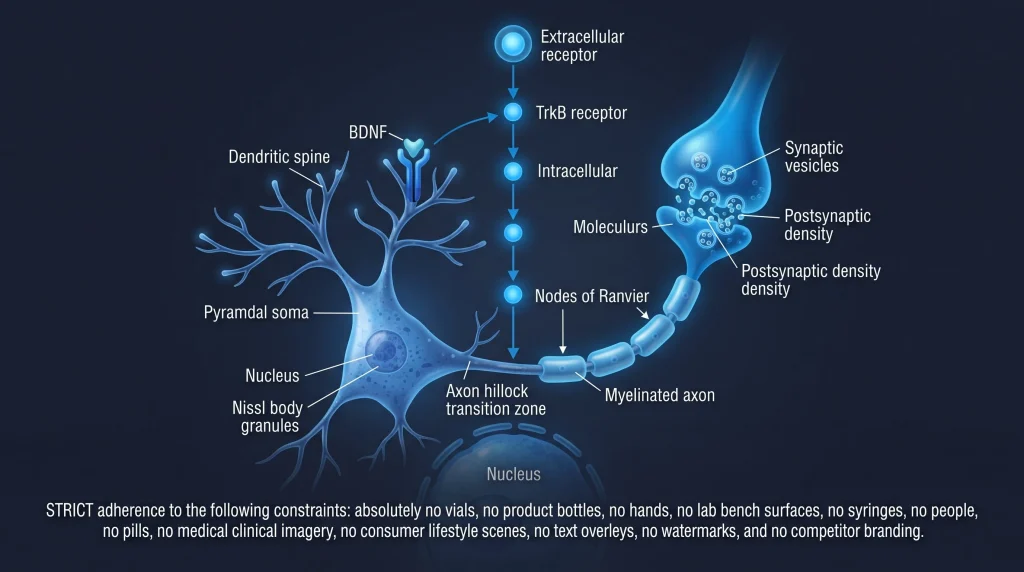
BDNF is a protein that supports nerve cell growth. It binds to the TrkB receptor on neurons. In cell models, Semax changed BDNF gene expression. Scientists measured BDNF RNA levels and protein levels in treated cells.
According to Dolotov et al. (2006) (PMID 17189037), Semax raised BDNF protein levels in hippocampal cells in rat models. The hippocampus is a brain region used in memory research. Semax-treated animals showed higher BDNF than control groups. These are animal model findings only.
Semax is available as a COA-verified research compound. Every lot is tested to ≥99% purity. Each vial ships with a COA and lot number.
What Is Selank and How Does It Work?
Selank is a 7-amino acid peptide. Its sequence is Thr-Lys-Pro-Arg-Pro-Gly-Pro. It is derived from tuftsin, a natural immune signal peptide. Selank is studied for effects on the GABA (gamma-aminobutyric acid) pathway in nerve cells.
GABA is the main inhibitory signal in the CNS. It binds to GABA-A receptors on neurons. When GABA-A is active, it reduces nerve signal activity in cell models. Selank changed GABA receptor gene markers in treated neural cells.
Selank is also studied for effects on BDNF levels in nerve cell models. Scientists have measured BDNF RNA changes after Selank exposure. Some models tracked enkephalin (natural opiate peptide) levels as well. All data come from cell and animal models.
Selank is available as a COA-verified research compound. Each vial ships with a COA and lot number.
What Is PE-22-28 and How Is It Studied?
PE-22-28 is a 7-amino acid peptide. It is a short analog of the BDNF molecule. BDNF has a loop region (Loop 2) that binds TrkB (tropomyosin receptor kinase B) on neuron surfaces. PE-22-28 is designed to mimic this loop.
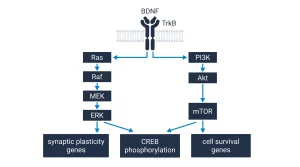
When TrkB is activated, it turns on survival and growth signals inside the neuron. Key signals include the MAPK pathway and the PI3K pathway. Both support nerve cell gene activity and long-term structure changes.
PE-22-28 is studied in neural cell lines for effects on TrkB activation markers. Scientists measure TrkB phosphorylation (a sign of activation) and downstream signaling protein levels. All data come from in vitro cell models only.
How Do CNS Peptides Differ From Approved Brain Drugs?
Approved drugs for neurological conditions have completed human clinical trials. They have known safety and efficacy data. Examples include antidepressants that act on serotonin or norepinephrine signals.
CNS research peptides have not completed human clinical trials. They are studied in cell and animal models only. They target distinct steps in neural cell biology. Semax targets BDNF. Selank targets GABA receptors. PE-22-28 targets TrkB.
Each mechanism is tracked with specific lab assays. BDNF assays use ELISA kits. GABA receptor assays measure gene expression. TrkB assays measure protein activity levels.
| Feature | Approved Brain Drug | CNS Research Peptide |
| Clinical status | FDA-approved | Research-stage (cell/animal models only) |
| Study model | Human clinical trials | Cell assay, animal model |
| Key target | Receptor or enzyme (established) | Gene expression or TrkB receptor |
| Purity standard | Pharmaceutical-grade | ≥99% HPLC + mass spec |
| Availability | Prescription pharmacy | Research compound supplier |
| Application | Clinical care | Lab research only |
Frequently Asked Questions
What Are CNS Bioregulators?
CNS bioregulators are short peptides studied in cell and animal models for effects on brain and nerve cell gene activity. Key examples include Cortagen (4-amino acid, CNS tissue gene assays) and Semax (ACTH analog, BDNF markers in hippocampal cells). Others include Selank (tuftsin analog, GABA pathway) and PE-22-28 (TrkB receptor binding). Each targets a distinct step in neural cell biology. All data come from cell and animal studies. These compounds are for lab research use only.
What Is Cortagen?
Cortagen (Ala-Glu-Asp-Pro) is a 4-amino acid Khavinson bioregulator. It is linked to brain and bronchial tissue. In cell models, it is studied for gene expression changes in neural cell lines. Scientists expose neural cells to the compound and measure RNA levels for target genes. Key markers include cell survival and protein production genes. All data come from in vitro models. Cortagen is for lab research use only. It is not approved for human use.
What Is Semax?
Semax is a 7-amino acid peptide derived from ACTH, a pituitary signal protein. It is studied for effects on BDNF gene expression in neural cell and animal models. BDNF (brain-derived neurotrophic factor) is a protein that supports nerve cell growth. In rodent models, Semax raised BDNF in hippocampal tissue vs. control groups. These are animal model findings only. Next Level Pharm supplies Semax at ≥99% purity. For lab research use only.
What Is BDNF and Why Is It Studied?
BDNF (brain-derived neurotrophic factor) is a protein that supports the survival and growth of neurons. It binds to the TrkB receptor on neuron surfaces. When TrkB is active, it turns on signals that help cells survive and grow. BDNF is studied as a key marker in neural cell research. Compounds that change BDNF gene expression are tracked in cell and animal models. Research peptides like Semax and PE-22-28 are studied for effects on BDNF or TrkB.
What Is Selank?
Selank is a 7-amino acid peptide derived from tuftsin, a natural immune signal. It is studied for effects on GABA receptor markers and BDNF levels in nerve cell models. GABA (gamma-aminobutyric acid) is the main inhibitory signal in the CNS. In cell models, Selank changed GABA-A receptor gene markers. Some animal models tracked BDNF levels after Selank exposure. All data come from in vitro and animal models. Selank is for lab research use only.
What Is PE-22-28?
PE-22-28 is a 7-amino acid BDNF mimetic. It was designed to mimic Loop 2 of the BDNF molecule. This loop binds the TrkB receptor on neurons. In neural cell lines, PE-22-28 is studied for effects on TrkB activation markers and downstream signaling proteins. Scientists measure TrkB phosphorylation levels after exposure. These are in vitro findings only. PE-22-28 is for lab research use only. It is not approved for human use.
How Do BDNF and TrkB Work Together?
BDNF binds TrkB, a receptor on the surface of neurons. When BDNF binds TrkB, TrkB activates two key pathways. The first is the MAPK pathway, which links to gene activity changes. The second is the PI3K pathway, which links to cell survival signals. Together, these pathways support nerve cell growth and long-term structure. Research peptides like PE-22-28 that target TrkB are studied for effects on these downstream signals in neural cell models.
What Is GABA and Why Is It a Research Target?
GABA (gamma-aminobutyric acid) is the main inhibitory signal chemical in the CNS. It binds to GABA-A receptors on neurons and reduces nerve signal activity. Researchers study GABA receptor markers to understand how nerve signal balance changes in cell models. Peptides like Selank that act on GABA pathways are studied for gene expression changes in neural cells. All data come from in vitro and animal models. These are not clinical findings.
What Cell Models Are Used in CNS Research?
Common cell models include SH-SY5Y cells (human neuroblastoma cells) and PC12 cells (rat nerve-derived cells). SH-SY5Y cells are widely used for BDNF and TrkB assays. PC12 cells respond to nerve growth factor signals. Animal models include rat stress models for BDNF and behavior assays. Researchers add the test peptide to cell cultures and measure gene and protein markers. All cited data in this article come from these cell and animal model sources.
Are These Compounds Verified for Research Use?
Research-grade CNS peptides are tested by HPLC and mass spec per batch. HPLC confirms ≥99% purity for the target compound peak. Mass spec confirms molecular weight matches the expected amino acid sequence. A COA with lot number is provided per batch. All compounds are for lab research use only and are not for clinical or personal use of any kind.
Summary
CNS bioregulators are short peptides studied in cell and animal models for effects on brain and nerve cell gene activity. Key compounds include Cortagen (Ala-Glu-Asp-Pro, CNS tissue gene assays), Semax (BDNF signals in hippocampal cells), Selank (GABA pathway markers), and PE-22-28 (TrkB receptor binding).
Each peptide targets a distinct step in neural cell biology. All cited findings come from cell and animal research. These compounds are not approved for human use. They are for lab research only.
What Should You Do Next?
Researchers studying CNS and neural cell biology should source verified compounds for lab protocols. Before any study, confirm HPLC purity is ≥99% and mass spec matches the expected molecular weight. Record the lot number from the COA for batch traceability.
Shop research peptides. Cortagen, Semax, Selank, and PE-22-28 are available with HPLC and mass spec data on every COA.
People Also Read
- Neuroprotective Peptide Research: Semax, Selank, PE-22-28
- Brain Peptides Compared: Semax vs Selank vs PE-22-28 Research
About the Author
Next Level Pharm Research Team
Alex M covers peer-reviewed findings in peptide science for Next Level Pharm, a US-based supplier of research-grade peptides verified to ≥99% purity via HPLC and mass spectrometry on every batch.
Disclaimer: The information provided on this page is for educational and research purposes only. Next Level Pharm products are intended for laboratory research use only. They are not intended for human consumption, diagnostic, therapeutic, or medicinal purposes. This content does not constitute medical advice. Always consult a licensed healthcare professional before making any health-related decisions.