
HCG Research: Chorionic Gonadotropin Mechanism Studies

Last updated: June 2026
An HCG research compound is a glycoprotein hormone. It binds the LH receptor (luteinizing hormone receptor, or LH-R) on Leydig cells and ovarian cells. HCG stands for human chorionic gonadotropin. In laboratory cell models, HCG has been studied for its effects on LH-R binding, cAMP signal output, and downstream gene expression in gonadal cell cultures. According to Cole LA (2009), HCG binds the LH receptor with high strength and drives signal output in cell-based assays.
Next Level Pharm is a US-based supplier of research-grade HCG, verified to ≥99.4% purity by HPLC and mass spectrometry on every batch. Each lot ships with a COA and a lot number for full traceability.
Key Takeaways
- LH-R agonist: HCG binds the LH receptor on Leydig cells and ovarian cells. It shares this target with natural LH but has a longer signal duration in animal models.
- cAMP signal: HCG activates the G-protein pathway and raises cAMP levels in the target cell. cAMP then drives gene output through PKA (protein kinase A).
- Longer half-life: HCG has a longer half-life than natural LH in animal studies. This is due to its carbohydrate (sugar) side chains, which slow its removal from the blood.
- COA-verified lots: Next Level Pharm ships lyophilized HCG lots with HPLC and mass spec data on every batch. Each lot has a traceable number.
- Research use only: All HCG in this catalog is for laboratory research use only. No clinical outcomes are claimed.
What Is HCG and Which Receptor Does It Target?
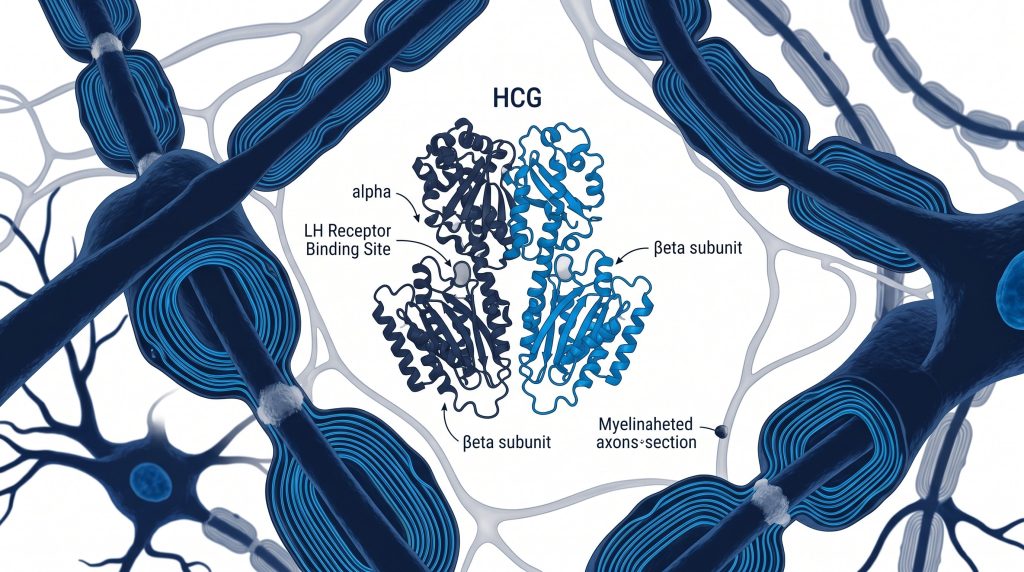
HCG is a glycoprotein hormone made up of an alpha and a beta subunit. It binds the LH receptor on Leydig cells, ovarian cells, and trophoblast cells. The LH-R signals through cAMP when HCG binds.
HCG shares its alpha subunit with LH, FSH, and TSH. The beta subunit gives each hormone its target specificity. In HCG, the beta subunit has a C-terminal tail not found in natural LH. This tail carries extra sugar chains. These chains are the main reason HCG stays in the blood longer than LH in animal research models. Lab teams study the role of these sugar chains in HCG’s binding strength and signal duration. Cell models use recombinant HCG to study LH-R activation without other hormone interference. This gives clean receptor signal data for one hormone at a time.
How Does HCG Bind to the LH Receptor?
HCG binds the outer domain of the LH receptor. This causes a shape change in the receptor protein. The shape change starts a G-protein cascade that raises cAMP in the cell.
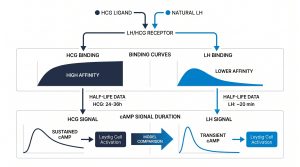
LH-R is a G-protein-coupled receptor (GPCR). When HCG binds the outer surface of LH-R, the receptor changes shape. This activates a G-protein inside the cell membrane. The activated G-protein then turns on an enzyme that makes cAMP. cAMP turns on PKA. PKA tags proteins that drive gene output, such as the genes for steroid-making enzymes in Leydig cells. According to Casarini et al. (2017), HCG and LH trigger the same receptor but produce different signal outputs depending on the cell model. HCG produces a longer cAMP peak than LH in some Leydig cell models.
What Do Cell Models Show About HCG Signaling?
Cell models show that HCG raises cAMP in LH-R cell lines. Downstream markers include steroid enzyme gene output and receptor uptake rates. Signal data vary by cell line and HCG amount.
Standard HCG cell studies use CHO-K1 cells with human LH-R or primary Leydig cell cultures. After confirming receptor binding, researchers measure intracellular cAMP using HTRF (homogeneous time-resolved fluorescence) or ELISA kits. Next, they measure steroidogenic enzyme mRNA, such as CYP11A1 (the gene for the first enzyme in the steroid path). According to Rao CV (2001), HCG has been studied for its effects on LH-R signal in gonadal and non-gonadal cell lines. These findings come from research models and do not represent clinical outcomes.
How Does HCG Compare to Natural LH in Research?
HCG and LH both target LH-R but differ in half-life and signal duration. HCG has a longer half-life in animal models due to extra sugar chains. This makes HCG a useful long-signal reference compound in LH-R research.
| Compound | LH-R Binding | Half-Life (Animal Model) | Key Study |
| HCG | High strength | ~24-30 hours | Cole LA (2009) PMID 20219529 |
| LH (native) | High strength | ~20 minutes | Rao CV (2001) PMID 11316794 |
| Recombinant LH | High strength | ~8-10 hours | Casarini et al. (2017) PMID 27543439 |
Lab teams use this difference to study how signal duration affects gene output in Leydig cell models. A long HCG signal and a short LH signal produce different steroid enzyme gene patterns in the same cell model. This lets researchers study the effect of signal duration on LH-R gene output without changing the receptor target.
What Biomarkers Do Researchers Measure in HCG Studies?
Key biomarkers are cAMP levels, CYP11A1 gene output, and LH-R surface expression. Researchers also measure receptor uptake rates and downstream steroid enzyme amounts in Leydig cell cultures.
Standard HCG assay protocols start with a receptor binding study. This confirms that the HCG lot is active at LH-R. After binding, researchers measure cAMP using HTRF or ELISA. Gene expression studies use RT-PCR to measure CYP11A1 mRNA in Leydig cell cultures. CYP11A1 is the first enzyme in the steroid-making path, so its mRNA level is a direct sign of LH-R gene activation. Receptor uptake studies track how fast HCG-bound LH-R is pulled into the cell. This data helps map signal timing in Leydig cell models using different HCG amounts.
What Research Tools Are Available for HCG Studies?
Lab teams need COA-verified peptide, LH-R binding kits, cAMP detection reagents, Leydig cell or ovarian cell cultures, and published protocols. All tools must match the study design.
Research teams need a verified HCG lot to run any LH-R study. The lot must match the published reference standard for molecular weight and purity. Next Level Pharm verifies each HCG lot by HPLC and mass spectrometry before shipping. This confirms that the peptide sequence and glycoprotein structure match the research standard. LH-R assay kits are available from laboratory supply vendors. When pairing HCG with these kits, teams confirm that binding matches reference data before running cAMP assays. View the HCG product page for lot-specific COA and mass spec data.
Frequently Asked Questions
What is HCG in research?
HCG (human chorionic gonadotropin) is a glycoprotein hormone used in laboratory research to study LH receptor signaling. It shares the LH receptor with natural LH but has a longer half-life in animal models due to extra sugar chains on its beta subunit. Research-grade HCG is used in cell studies of Leydig cell gene output, steroid enzyme expression, and receptor uptake kinetics. This product is for laboratory research purposes only.
How does HCG differ from LH?
HCG and LH both bind the LH receptor. The difference is in signal duration and half-life. HCG stays in the blood much longer than LH in animal studies. This is because HCG has a C-terminal peptide tail with extra sugar chains that slow its removal. In cell studies, HCG produces a longer cAMP peak in Leydig cell models compared to native LH. This difference lets researchers study signal duration effects on gene output in the same cell system.
What cell lines are used in HCG research?
Common cell lines include MA-10 and MLTC-1 Leydig tumor cell lines for steroid gene studies. Primary rat or human Leydig cell cultures are used when available. CHO-K1 cells stably expressing human LH-R are used for receptor binding assays. Granulosa cell lines are used for ovarian LH-R studies. Each cell line has a known LH-R expression level. This makes it easier to compare cAMP data across labs using the same HCG amount and protocol.
How does HCG activate the LH receptor?
HCG binds the outer domain of LH-R and causes a shape change in the receptor protein. The shape change activates a G-protein inside the cell. The G-protein turns on an enzyme that makes cAMP. cAMP activates PKA, which tags proteins that drive steroid enzyme gene output. This chain of events has been studied in Leydig cell models. Signal data from published assays show that HCG produces a stronger cAMP peak than natural LH at the same receptor in some Leydig cell protocols.
What is the half-life of HCG in animal research models?
In animal research models, HCG has a half-life of about 24 to 30 hours. Natural LH has a half-life of about 20 minutes. The difference is due to the extra sugar chains on HCG’s C-terminal peptide tail. These chains slow the removal of HCG from the blood. Lab teams use this difference to study how signal duration affects LH-R gene output. A long HCG signal and a short LH signal produce different patterns of steroid enzyme gene expression in Leydig cell models.
Can HCG be used in in vitro cell studies?
Yes. HCG is used in standard cell-based assays for LH-R signaling. These include receptor binding tests, cAMP output assays, and gene expression studies using RT-PCR. HCG dissolves in standard laboratory buffer and is diluted into cell assay medium at the target amount. Lab teams must confirm that the vehicle does not affect cell health before running the assay. Published protocols for LH-R cell assays list starting amounts for HCG response curves.
How is HCG stored for research?
Lyophilized research-grade HCG should be stored at -20°C in a dry place. Reconstituted solutions should be kept at 4°C and used within 48 to 72 hours. Freeze-thaw cycles reduce peptide activity in cell assays. This product ships as a dry powder stable at room temperature during transit. Upon arrival, store at -20°C until the reconstitution step of the research protocol.
What published studies cover HCG receptor binding?
Cole LA (2009) in Reproductive Biology and Endocrinology (PMID 20219529) covers HCG biology and receptor binding. Casarini et al. (2017) in Frontiers in Endocrinology (PMID 27543439) shows differences in HCG versus LH signal output at the same receptor. Rao CV (2001) in Biology of Reproduction (PMID 11316794) covers the many roles of HCG at LH-R in gonadal and non-gonadal tissue models. Researchers should cite primary receptor studies when publishing HCG cell assay results.
Does HCG bind any receptor other than LH-R?
Published data show that HCG binds the LH receptor as its primary target in standard cell assays. Some research has studied HCG binding to thyroid-stimulating hormone receptor (TSH-R) at high amounts in cell models, but this is not its main research target. In standard laboratory cell protocols, researchers use HCG as a specific LH-R agonist. Tests with LH-R-negative control cell lines confirm that binding and cAMP signal are receptor-specific.
How does HCG research differ from clinical use?
HCG sold by this supplier is for laboratory research only. Published clinical data on HCG exist in the peer-reviewed literature, but this product is not for clinical or personal use. Research use covers receptor binding assays, cAMP signal studies, and gene expression protocols in cell and animal models. Any mention of clinical data in this article is scientific context for the receptor research topic, not a description of this product’s use.
Summary
HCG is a glycoprotein hormone that binds the LH receptor in laboratory cell models. Its long signal duration and published receptor binding data make it a useful reference tool for LH-R research in Leydig cell and ovarian cell systems.
Lab teams use HCG to study receptor binding, cAMP output, and steroid enzyme gene expression. Published data from Cole LA (2009), Casarini et al. (2017), and Rao CV (2001) provide a strong reference for cell study design.
What Should You Do Next?
- Review LH-R binding protocols in published Leydig cell assay literature before ordering.
- Confirm your cell line expresses LH-R at the level needed for the planned assay.
- Review COA data for lot-specific purity on the HCG product page.
- Browse related fitness and GH research peptides for other receptor research tools.
- Shop research peptides at https://nextlevelpharm.com/shop/.
People Also Read
- Ipamorelin Research: Growth Hormone Secretagogue Mechanism Studies
- Sermorelin Research: GHRH Analog and Growth Hormone Studies
About the Author
Next Level Pharm Research Team
Alex M covers peer-reviewed findings in peptide science for Next Level Pharm, a US-based supplier of research-grade peptides verified to ≥99% purity via HPLC and mass spectrometry on every batch.
Disclaimer: The information provided on this page is for educational and research purposes only. Next Level Pharm products are intended for laboratory research use only. They are not intended for human consumption, diagnostic, therapeutic, or medicinal purposes. This content does not constitute medical advice. Always consult a licensed healthcare professional before making any health-related decisions.