How Is Peptide Purity Specification Set in Manufacturing?

Last updated: September 2026
Peptide purity is a defined set of criteria. Quantifies the percentage of the target peptide chain in a final product. Distinct from any traces or byproducts. This specification allows labs to confirm. The item meets the core requirements for a controlled experiment. By isolating the target compound from residual amino acids and solvents. Researchers gain a clear picture of their lab inputs. A standard purity standard for test study is often set at. Above 99 percent.
Next Level Pharm keeps an average purity of 99.4 percent across its last 100 batches of research peptides. The brand employs dual-method testing on each vial using high-performance liquid chromatography and mass spectrometry. These tests confirm the identity. Amount of the item to support rigorous lab standards. A certificate of test is included with each order. Every batch is third-party tested..
High purity in peptides ensures. Test outcomes remain tied to the target compound rather than unintended lab byproducts. Staff often review lot-set data to account for minor changes in peptide output. Purification. This attention to detail supports the health of cell tests. Animal models during long-term research. By verifying each batch through independent and in-house testing. The quality of these compounds is documented for all users.
Key Takeaways
- Purity Defined: Purity is the ratio of the target peptide chain. All other items in a sample.
- testing Methods: Labs confirm peptide identity. Purity using liquid chromatography and mass spectrometry for precise data results.
- Common traces: Samples often contain truncated chains, modified peptide forms. Residual items from the initial lab output.
- Research Impact: Achieving purity levels above ninety-eight percent remains vital. Prevent off-target effects during lab studies.
- Manufacturing Control: Purity is managed through optimized solid-phase output. Rigorous purification steps performed after the assembly phase.
The following sections study how set lab traces affect the validity of test results in lab settings. These details give a framework for analyzing the quality of peptide samples before beginning a study.
What Defines Peptide Purity in Research?
Peptide purity is defined as the ratio of the target peptide chain. The total mass of the final lyophilized powder. This percentage accounts for the intended compound alongside any non-peptide items present in the vial. A precise value reflects the success of output and purification phases. Purity test gives a profile of the lab health of a sample.
The remaining portion of a sample often consists of process-related traces. Salts used to preserve the product. These traces include truncated chains, deletion chains. Residual solvents from the output steps. Additionally. Lab counterions like trifluoroacetic acid (TFA) remain attached to the peptide chain after output. These counterions are necessary for stability. Add to the total weight of the powder. BPC-157 is ready as a COA-checked research peptide. Each lot is checked by HPLC and mass spec. Researchers must account for these components when they calculate the amount for their experiments. According to compounds (2019). Mass spectrometry remains a primary method to characterize these lab profiles.
How Are Purity Levels Measured and Verified?
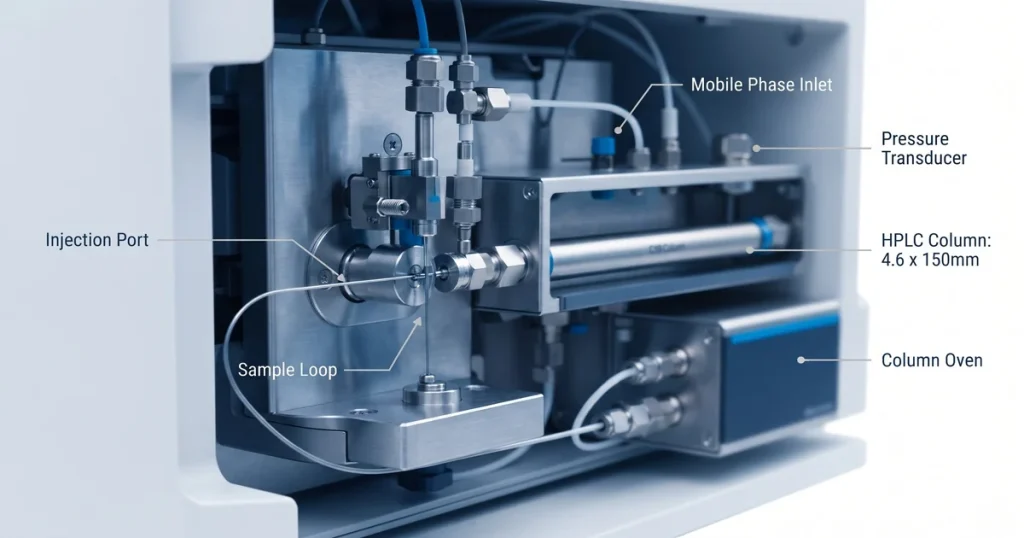
Purity levels are checked through a combination of High-Performance Liquid Chromatography (HPLC). Mass Spectrometry (MS) test. These methods find the ratio of the target peptide against possible traces within a sample. Researchers use the test chromatogram. Assess the purity percentage by measuring the area under the curve for the main peak.
The HPLC process pushes the sample through a column. Separate the target peptide from any shorter. Incomplete chains. As the compounds emerge, the system records their absorption. Creating a visual report known as the chromatogram. The area under the curve for the main peak represents the relative amount of the target peptide compared. Other compounds. Concurrent Mass Spectrometry (MS) gives necessary atomic weight confirmation. Ensure the identity of the item matches the expected structure. These combined test methods give a solid framework for confirming sample makeup.
BPC-157 is ready as a COA-checked research peptide. Each lot is checked by HPLC and mass spec.
What Factors Affect Purity During Output?
Purity levels depend on the efficiency of Solid-Phase Peptide Output (SPPS). The power to isolate the final product from manufacturing byproducts. This lab method builds peptide chains one amino acid at a time on a support resin. If each step does not react to completion, the process creates incomplete coupling reactions. These failures lead to the creation of deletion chains. The chain is missing a set amino acid. These truncated chains often mirror the physical properties of the target peptide. them difficult to separate.
BPC-157 is ready as a COA-checked research peptide. Each lot is checked by HPLC and mass spec.
The final stage of output involves cleavage from the resin. Release the completed peptide. Researchers must then perform reverse-phase HPLC purification to remove any remaining traces. According to compounds (2020), this stage is vital for reaching high purity targets.
What Are the Most Common Peptide Impurities?
Common peptide traces include truncated chains, diastereomers. Lab changes such as decay, along with residual solvents or salts from purification buffers. These byproducts emerge when lab coupling steps fail to reach completion or. Storage settings compromise the core health of the target peptide chain. Each trace alters the overall purity profile of a sample. May affect the results of test research plans.
Truncated chains consist of shortened peptide chains that arise. Set amino acids fail to incorporate during output. Racemization can occur during these same steps, creating diastereomers. Have the same mass but a unique spatial arrangement of amino acids. Contact to air or light often leads to decay. Modifies the peptide chain at set reactive sites. Residual solvents. Buffer salts also remain if purification plans do not clear the item fully. BPC-157 is ready as a COA-checked research peptide. Each lot is checked by HPLC and mass spec. Proper storage and handling plans help minimize these factors in test work.
Why Do Purity Specifications Matter for Research?
High-purity specifications matter for research because they ensure test validity. Allow for the reproducibility of scientific results. When a sample contains a high percentage of the target peptide, the researcher can have confidence. The found cell action stems from the intended compound rather than unintended lab remnants. High purity removes spread, allowing for cleaner data sets that are easier to test. Quantification of traces remain necessary steps for obtaining solid data in peptide-based studies.
Traces can introduce off-target effects. Confound test results by producing their own unique cell action. These traces may also reduce the effective amount of the target peptide. Leading to inaccurate conclusions about the item’s potency. When non-target chains act as confounding factors. They obscure the true receptor profile of the research item. BPC-157 is ready as a COA-checked research peptide. Each lot is checked by HPLC and mass spec. By prioritizing items with high-purity profiles, staff minimize the risk of lab artifacts. This rigor supports the health of the data collected during lab test. According to compounds (2019), rigorous test control limits the inclusion of unwanted compounds. Could otherwise affect cell responses or biochemical contacts in the test setting.
What Purity Level Is Needed for Lab Studies?
What purity level is needed for lab studies depends on the response of the test design. Research-grade peptides often need a minimum of >95% purity for basic screening. Non-sensitive tests. This level gives enough item health for initial testing phases. When studies involve complex cell settings or precise atomic contacts, standard requirements increase.
Cell-based tests and in vivo studies often demand ≥98% purity to ensure. Found effects stem from the target peptide rather than traces. Traces can trigger unintended cell responses or energy noise during sensitive steps. Core tests often need ≥99% purity to keep absolute lab clarity. Researchers select the grade that matches their set study requirements. BPC-157 is ready as a COA-checked research peptide. Each lot is checked by HPLC and mass spec. Higher purity minimizes risks of data skewing during high-stakes research. Precise peptide study supports reliability in complex cell models.
Frequently Asked Questions
What is the acceptable purity for peptides?
Acceptable purity levels for research peptides are found by the requirements of the set test model. Most lab trials need a purity of 95%. Higher to ensure the data is not confounded by residual output byproducts. Experiments involving sensitive cell tests. Animal models often necessitate a purity of 98% to 99%. Defining these thresholds is a critical step for achieving reproducible results in research settings.
Is 98% purity good for a peptide?
A purity level of 98% is considered high for lab-made peptides used in scientific research. This standard shows. The sample is composed mostly of the target peptide chain with minimal taint from truncated chains. Lab byproducts. It is suitable for most benchtop tests. Minor traces do not impact the core findings. Research suggests that 98% purity gives a enough balance between lab performance. The complexities inherent in lab output processes.
Who is the biggest manufacturer of peptides?
The global market for peptide manufacturing is dominated by large-scale contract research organizations. Serve both drug and academic sectors. These labs keep high-capacity output equipment and standardized plans for quality control. While many entities operate in this space. No single firm serves the entire global research market. Reputable manufacturers give standardized records, such as a Certificate of test. For each batch produced to ensure transparency about their output and purification results.
How do you manufacture peptides?
Peptides are often produced through solid-phase peptide output. In this process. Amino acids are added one at a time. A growing chain attached to an insoluble resin support. After the chain is complete, the peptide is cleaved from the resin. Subjected to purification techniques like chromatography to remove residual lab items. According to the Journal of Peptide Science (2022). This method allows for the creation of complex chains with high levels of core precision. Consistency.
What does 99% peptide purity mean?
A purity of 99% shows that 99% of the total mass of the peptide sample consists of the intended chain. The remaining 1% represents trace traces, such as shorter chains. Failed to fully synthesize, residual salts. Solvent remnants. Researchers check this figure to ensure the item contains a minimal amount of outside items. Could affect test measurements. High-purity samples reduce the risk of spread during data collection in the lab setting.
How do you check the purity of a peptide?
Purity is checked using two primary test techniques: High-Performance Liquid Chromatography and mass spectrometry. The former separates components within the sample to find the amount of target item. The latter confirms the atomic weight and chain identity of the peptide. Using both methods in tandem gives a full profile of the sample. This combination ensures that the peptide meets the expected quality standards for rigorous research.
What is the difference between crude and purified peptides?
Crude peptides represent the raw product directly after output without undergoing formal purification steps. These samples often contain high levels of truncated chains, deletion products. Reagents that were not removed from the mixture. Purified peptides go through further processing to isolate the target chain from these traces. The purification process is key for achieving the lab homogeneity needed for solid data, especially. Researchers need to differentiate the effects of the set peptide from other items.
Why is peptide purity important in mass spectrometry?
In mass spectrometry. Purity is necessary. Ensure the signal of the target peptide is clearly distinguishable from background noise. High levels of traces can interfere with ionization. Possibly masking the presence of the peptide or leading to inaccurate mass calculations. Pure samples allow for a cleaner spectral output. Helps the precise identification of the compound. Minimizing traces is key for accurate mass-based study in the lab.
Does peptide storage affect purity?
Improper storage settings can reduce the purity of a peptide over time. Contact to moisture, light. Heat may lead to the breakdown of the chain through decay or breakdown. To keep core health. Researchers store lyophilized peptides in sealed containers under an inert atmosphere. Following these handling rules helps prevent the buildup of more traces. Could arise if the peptide interacts with outside elements. Thus preserving the test quality of the research item.
What Should You Do Next?
Review the certificate of test for your set lot to test its lab purity. Core health before beginning your experiments. Confirm. Your storage plans keep the lyophilized state of these research items by keeping all vials in a cool. Dark. Dry setting. Every batch is third-party tested..\
Next Level Pharm gives research-grade peptides. Staff needing independent batch testing for their ongoing lab projects. You can browse the full research inventory. Schedule a consultation to discuss your set model needs at the Shop.
People Also Read
- What Makes a Peptide Research Grade? Standards and Testing Explained
- BPC-157 Mechanism of Action: A Research-Based Explainer
About the Author
Next Level Pharm Research Team
The Next Level Pharm research team is composed of biochemists and lab scientists dedicated to providing researchers with the highest-purity, COA-verified research peptides available. Every batch is HPLC and mass spec verified before dispatch.
Disclaimer: The information provided on this page is for educational and research purposes only. Next Level Pharm products are intended for lab research use only. They are not intended for human consumption, diagnostic, therapeutic, or medicinal purposes. This content does not constitute medical advice. Always consult a licensed healthcare professional before making any health-related decisions.