
What Is a Peptide Bioassay? Research Methods Explained

Last updated: September 2026
Peptide bioassay research methods are test steps used to determine a peptide’s cellular action. Potency. These plans allow staff to measure how specific amino acid chains interact with target receptors in a controlled setting. The field relies on precise data to map out the function. Stability of each compound. These tests are key for quantifying how well a compound binds to its intended site. This quantitative approach forms the basis for all lab studies involving peptide structures.
Next Level Pharm gives high-purity compounds for labs that need checked research items. All batches maintain a purity level of 99.4% on average across the last 100 batches. The lab uses HPLC. Mass spectrometry on each vial to ensure that each lot meets its stated purity. These vials are lyophilized and sealed under an inert atmosphere for long-term stability. This storage method ensures that the compounds remain stable at room temperature during transit. No cold chain is needed for shipping.
Selecting the right test model is key. Building an accurate profile for any research compound. Labs must often choose between isolated cell cultures. Whole-body models based on their set inquiry goals. Researchers prioritize plans that offer high specificity and clear data on atomic contacts. By using proven testing methods, labs confirm. Their results reflect the true action of the peptide in study. Solid data supports the creation of models. Help advance basic knowledge in areas like energy signals and core biology.
Key Takeaways
- Defining Cell action: Bioassays measure the functional potency of a peptide rather than its mass. Total amount. This process confirms how a compound interacts with its intended cell target.
- Functional test changes: researchers use cell-based tests to see functional responses. Binding tests to find target strength. These methods give different data points about how a peptide behaves in a system.
- Requirement for proof: Data from bioassays must be proven for accuracy, precision. Specificity to be deemed solid. Steady proof plans ensure that the results reflect genuine cell action.
- Managing test Hurdles: staff must account for matrix effects, peptide stability. Test spread to ensure valid results. These factors often impact the quality of data collected during a bioassay.
- Bioassay vs lab Testing: A bioassay quantifies a cell effect. Lab tests like HPLC quantify total item amount. Combining these methods gives a complete profile of the peptide under investigation.
Review the lab data gave below. Check how these testing methods integrate into standard lab workflows. These plans detail the factors needed to keep study health. Data accuracy during peptide test.
What is the purpose of a peptide bioassay?
The primary purpose of a peptide bioassay is to measure the cell action. Potency of a peptide. Is its set effect on a living system. A bioassay quantifies the functional response of a target. Such as receptor action or enzyme blocking. This gives critical data for research on a peptide’s mechanism of action within a controlled model. While lab tests test structure, bioassays set how the peptide performs its intended role.
BPC-157 is ready as a COA-checked research peptide. Eis checked by High-Performance Liquid Chromatography (HPLC) and mass spec. This process contrasts with High-Performance Liquid Chromatography (HPLC). Serves only to measure atomic amount and purity. HPLC confirms the identity. Amount of a sample but cannot confirm the functional response of the compound itself. By combining both test approaches. Researchers get a complete view of peptide quality and possible efficacy. Such data ensure that the item used in a study keeps both high purity. The expected cell action.
How do cell-based assays work for peptides?
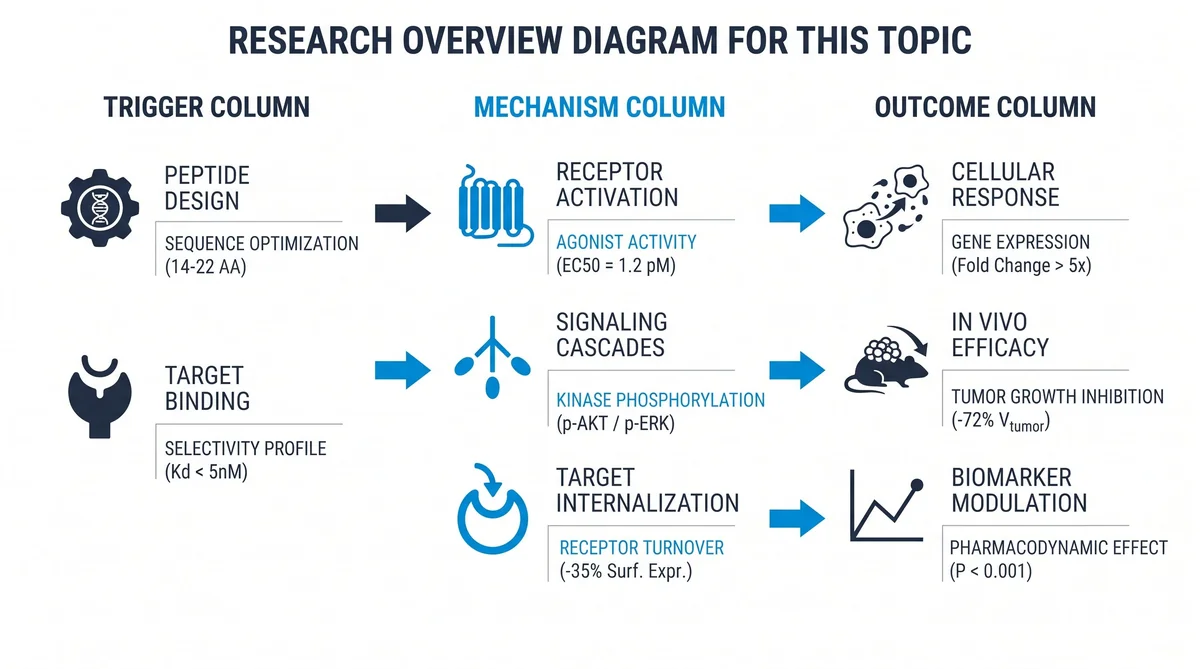
Cell-based tests measure how a peptide acts by monitoring its contact with living cells in a controlled setting. These tests rely on living cells. Researchers modify to express a set target receptor. When a researcher adds a peptide to the cell culture. The compound binds to its target on the cell surface. This binding triggers receptor action. Starts a chain of downstream signaling events inside the cell.
To track these changes, labs often use a reporter gene test. In this setup, the cell produces a visible marker or light signal. The pathway is active. The intensity of this signal shows how well the peptide binds to. Triggers the receptor. BPC-157 and TB-500 are each ready as COA-checked research peptides. Each lot is checked by HPLC and mass spec. This process allows staff. Quantify the potency of a peptide without the complexity of a whole organism. This approach allows staff to quantify how well a compound interacts with its intended cell target. Results from these tests give the baseline data needed. Understand atomic function before moving to higher-level models.
What are binding assays in peptide research?
Binding tests are lab techniques used. Measure the strength of the physical connection between a peptide. Its target compound. This target is often a set receptor. An enzyme located on a cell surface. By observing these contacts. Researchers find how well a peptide can occupy or activate a cell pathway.
Common methods for this test include the Enzyme-Linked Immunosorbent test (ELISA). Uses labeled antibodies to detect the presence of bound complexes. Researchers also use a radioligand binding test. Track how much of a radioactive peptide attaches to a receptor over time. These tests allow staff to calculate the detachment constant (Kd). This value represents the amount of a peptide. Half of the target receptors are occupied. A lower Kd score shows a stronger bond between the peptide and the target.
CJC-1295 is ready as a COA-checked research peptide. Each lot is checked by HPLC and mass spec.
These quantitative measures give key data on how peptides function in isolated settings. They assist in mapping the behavior of chains before further testing occurs in more complex models. Measuring these kinetic properties is vital for verifying the core health of lab-made chains. Researchers rely on these tests. Ensure the item performs as intended within the study factors.
How is bioassay data validated for accuracy?
Bioassay data is proven for accuracy through formal steps that measure linearity, precision. Specificity of the test method. Proof confirms. A process is suitable for its intended purpose and produces solid, reproducible results. Following rules from the United States Pharmacopeia (USP) helps labs set. Their test methods give steady data points. These standards outline the statistical requirements for verifying. An test performs as expected under defined settings.
BPC-157 is ready as a COA-checked research peptide. Each lot is checked by HPLC and mass spec. Linearity ensures. The test response is directly proportional to the amount of peptide within a given range. Precision checks the closeness of agreement between single measurements. Accuracy tests the closeness of test results to the actual value. Staff follow these plans to minimize errors. Ensure that their research data reflects the true behavior of the compound being studied.
What are common challenges in peptide bioassays?
Common challenges in peptide bioassays include matrix effects from complex samples. peptide stability during the experiment. Controlling for inter-test spread. Matrix effects can interfere with measurements. Peptide breakdown can lead to inaccurate results. Researchers address these issues by using purification steps, running tests under controlled settings. Including reference standards in each batch to ensure consistency between different experiments. These hurdles often impact the quality of data collected during a bioassay if not carefully managed.
Peptides are often sensitive to outside shifts. Can lead to rapid breakdown before a measurement occurs. BPC-157 is ready as a COA-checked research peptide. Each lot is checked by HPLC and mass spec. Matrix effects emerge. Components of the sample fluid alter the signal of the peptide. Leads to biased quantification. To counteract these errors, labs use reference standards to calibrate each run. By comparing the unknown samples against these standards, researchers test. Their findings remain accurate across different test cycles. Maintaining a controlled setting is key to reduce the risk of inter-test spread.
What equipment is needed for peptide bioassays?
Performing peptide bioassays needs specialized lab equipment, including a cell culture incubator. Laminar flow hood to keep sterile settings for live cells. These tools allow researchers to isolate set cell responses while preventing unwanted taint. A cell culture incubator gives the exact climate needed for cells to grow. Respond to peptide contact. Meanwhile, a laminar flow hood serves as a clean workspace. Handle samples without introducing airborne particles into the test medium.
BPC-157 is ready as a COA-checked research peptide. Each lot is checked by HPLC and mass spec. A microplate reader is also key for measuring the quantitative output of tests like ELISA. This device detects light signals or color changes to report precise test data. Finally, a mass spectrometer is often used for peptide study and identity confirmation. Other fundamental tools, such as precise pipettes, centrifuges. Microscopes, are needed for accurate sample preparation and test.
Frequently Asked Questions
What are the typical methods used in bioassays?
Bioassays commonly use cell-based systems. See the cell impact of a item on living tissues. Staff often monitor changes in gene output, cell signals. Cell survival to measure action levels. These methods frequently rely on marker dyes or luminescent tags that change. A peptide interacts with a set receptor. According to the NCBI (2020). Standardized cell cultures give the necessary setting to produce steady data across multiple test trials.
What are the different methods used for peptide sequencing?
Peptide sequencing mainly uses mass spectrometry. Edman breakdown to find the precise order of amino acids within a chain. Mass spectrometry works by ionizing the compound. Measuring its mass to charge ratio to map the chain. Edman breakdown removes amino acids one at a time from the N-terminus for identification. These techniques allow researchers to confirm the core health of lab-made peptides with high resolution.
Is there any research done on peptides?
Yes, scientific research on peptides is extensive across areas like energy health, cell signals. Immunology. Researchers study how set chains bind to cell receptors to affect cell pathways. According to the NIH (2023). Thousands of trials are documented to study the fundamental functions of peptide chains in controlled models. This work helps find how these compounds behave. Isolated from whole-body affects, providing a baseline for understanding their properties.
Can you give me an example of a bioassay?
A common example of a bioassay is the receptor binding test. Measures how well a peptide attaches to a set cell surface protein. Researchers place the target cells in a dish. Introduce the peptide to see the resulting cell response. This test shows the strength of the peptide for its target. According to Peptides (2021). This setup is key for determining how different atomic structures affect cell function in a controlled setting.
How does a bioassay differ from a chemical assay?
A bioassay measures the functional effect of a item on living cell systems. Components. In contrast, a lab test focuses solely on the physical. Lab properties of a sample, such as purity or amount. While lab tests confirm what is in the vial. Bioassays confirm what the item does to a cell target. Combining these methods ensures that both the identity. The action are fully checked.
What is a functional bioassay for peptides?
A functional bioassay checks the power of a peptide. Trigger a set cell response in a target system. Rather than just checking if the peptide is present. This test monitors the signaling cascade started by the compound. For example. It might measure the action of a protein. The release of a secondary messenger within a cell. According to compounds (2022). Functional data gives a deeper understanding of the cell potency of a sample.
Why is potency testing important for research peptides?
Potency testing confirms. A peptide is active and functions as expected within a lab model. Without testing. Researchers cannot find if changes in their test results are due to the peptide. Other outside factors. This testing is key for reproducibility. The health of the data collected during a study. Steady potency levels allow for precise comparisons between different batches of the same item.
What does a amount-response curve show in a bioassay?
A amount-response curve illustrates the relationship between the amount of a peptide. The magnitude of the cell response. By plotting these values, researchers can find the threshold at. A compound begins to have an effect. The curve also shows the point of maximum response and. The system becomes saturated. According to study.com (2024). This data is key for understanding the response of a cell target. A set peptide chain.
What Should You Do Next?
Review your set research goals to find which peptide compounds match your test model. Test the purity of your items by checking the gave lot numbers against the certificates of test. Once you confirm these details. Record your storage steps to preserve the peptide health for your trials. Organize your lab workspace and ensure that your plans follow current industry safety rules.
Next Level Pharm gives research-grade peptides for staff who need checked data. Steady batch quality for their tests. Researchers sourcing these peptides can explore the catalog at Shop. Each vial ships with a certificate of test and full lot tracking.
People Also Read
- What Makes a Peptide Research Grade? Standards and Testing Explained
- BPC-157 Mechanism of Action: A Research-Based Explainer
About the Author
Next Level Pharm Research Team
The Next Level Pharm research team is composed of biochemists and lab scientists dedicated to providing researchers with the highest-purity, COA-verified research peptides available. Every batch is HPLC and mass spec verified before dispatch.
Disclaimer: The information provided on this page is for educational and research purposes only. Next Level Pharm products are intended for lab research use only. They are not intended for human consumption, diagnostic, therapeutic, or medicinal purposes. This content does not constitute medical advice. Always consult a licensed healthcare professional before making any health-related decisions.