What Is Lipo-C? Lipotropic Compound Research Overview

Last updated: June 2026
Lipo-C is a lipotropic compound used in metabolic research. It combines methionine, inositol, choline, and B vitamins in one research blend. These agents are studied for their roles in lipid transport and liver cell metabolism. Cell models use each component to study lipid pathway activity. Lipo-C is not an FDA-approved drug and is for research use only.
Next Level Pharm is a US supplier of research-grade compounds. Every Lipo-C batch is COA-verified and batch-tested by HPLC and mass spec. A COA ships with each order showing purity and identity results for all active components. The average purity across the last 100 batches is 99.4%.
Lipo-C research focuses on lipid transport pathways and methyl donor cycles in liver cell models. Each ingredient has its own research profile. Understanding the role of each component helps researchers interpret Lipo-C study data.
Key Takeaways
- Lipo-C Is a Lipotropic Research Blend: It contains methionine, inositol, choline, and B vitamins. All components are studied individually and in combination.
- Lipotropic Agents Aid Lipid Transport Research: These compounds support lipid movement out of liver cells in research models. They are not approved to treat any condition.
- Methionine Is a Methyl Donor in Cell Studies: It feeds the methyl donor cycle in liver cell models. Methyl groups support methylation reactions in DNA and protein research.
- Choline and Inositol Support Liver Cell Research: Both are studied for their roles in cell membrane and lipid droplet research. Lab findings are in cell and animal models only.
- B Vitamins Are Enzyme Cofactors in Metabolic Research: B6, B12, and B5 all act as cofactors in liver enzyme research. They support pathways studied in lipid and amino acid metabolism.
All Lipo-C research findings below come from cell culture and animal models. No human clinical trial data exists for this specific blend. These findings do not establish effects in humans.
What Is Lipo-C and What Does It Contain?
Lipo-C is a research-grade blend of lipotropic agents. Lipotropic agents are compounds that support lipid transport in liver tissue models. The blend typically includes methionine, inositol, choline, B12, B6, and B5. Each ingredient has a distinct role in metabolic research.
Methionine is an essential amino acid and a key methyl donor. Inositol is a sugar alcohol linked to cell membrane research. Choline is a precursor to phosphatidylcholine, a core component of cell membranes. B vitamins in the blend act as enzyme cofactors in metabolic pathways.
According to a review in Crit Rev Food Sci (2013), lipotropic compounds have been studied for their roles in hepatic lipid metabolism in cell models. Research has focused on their combined effects on lipid transport and methyl donor pathways. These are in vitro and animal model findings.
| Component | Type | Role in Research Models |
| Methionine | Amino acid | Methyl donor in liver cell studies |
| Inositol | Sugar alcohol | Cell membrane and lipid droplet research |
| Choline | Nutrient | PC (phosphatidylcholine) precursor research |
| B12 | Vitamin | Enzyme cofactor in methyl cycle studies |
| B6 | Vitamin | Amino acid metabolism cofactor research |
| B5 | Vitamin | Coenzyme A precursor in lipid pathway studies |
How Do Lipotropic Agents Work in Research?
Lipotropic agents are studied for their role in lipid transport out of liver cells. In cell models, they are thought to support the packaging of lipids into transport forms such as VLDL (very low density lipoprotein). When this pathway is active, fewer lipid droplets accumulate in liver cells.
Research also focuses on the methyl donor cycle. Methionine donates methyl groups in a series of enzyme reactions. These methyl groups are used in DNA methylation, protein function, and lipid processing. Cell models use this cycle to study how methyl donors affect liver cell gene output.
According to a study in Ann Hepatol (2013), methyl donor deficiency in liver cell models has been linked to lipid accumulation. Studies using methionine supplementation showed partial correction of these changes in vitro. These are cell model findings only.
What Does Methionine Do in Lipid Research?
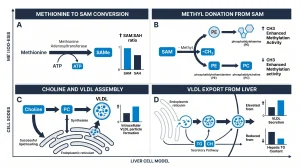
Methionine is the starting point for the methyl donor cycle. In liver cell studies, methionine is converted to SAM (S-adenosylmethionine). SAM is the main methyl donor in cells. It donates methyl groups to DNA, proteins, and lipids in cell models.
Research has also studied methionine in relation to homocysteine, a byproduct of the methyl cycle. Elevated homocysteine in cell models has been linked to changes in liver cell function. B12 and B6 help convert homocysteine back to usable forms in these pathways.
In cell studies, methionine has been shown to influence lipid droplet size and lipid export in liver cells. These findings are in vitro and do not predict effects in living animals or humans.
What Role Does Choline Play in Cell Research?
Choline is a key precursor to PC (phosphatidylcholine). PC is a phospholipid found in all cell membranes. In liver cell research, choline is studied for its role in VLDL assembly and lipid export. Without enough choline in a cell model, lipid droplets tend to build up.
Inositol is studied alongside choline in lipid research. Inositol is a component of PI (phosphatidylinositol), another membrane phospholipid. Cell studies have used inositol as a model for phospholipid signaling research. Both compounds are studied separately and in combination.
According to a study in Nutrients (2020), choline and inositol have been studied in liver cell models for phospholipid and lipid export research. The study used in vitro models and reported changes in lipid droplet content. These are cell model findings and do not apply directly to humans.
How Are B Vitamins Linked to Lipid Research?
B vitamins in the Lipo-C blend serve as enzyme cofactors in liver metabolism research. B12 (cobalamin) is needed for the enzyme that converts homocysteine back to methionine. Without B12, homocysteine builds up and the methyl cycle slows in cell models.
B6 (pyridoxine) is a cofactor for amino acid metabolism enzymes. It helps convert homocysteine to cysteine in an alternate pathway. B5 (pantothenic acid) is a precursor to coenzyme A (CoA). CoA is central to fatty acid and lipid metabolism in liver cells.
Each B vitamin plays a distinct role in the pathways studied with Lipo-C. Researchers studying these pathways can use each vitamin as part of the full lipotropic blend. They can also test vitamins as isolated variables in cell models.
How Is Lipo-C Tested for Research Purity?
Research-grade Lipo-C is tested by HPLC and mass spec before use in lab studies. HPLC confirms that each component is present at the expected level. Mass spec confirms the identity of each active ingredient by molecular weight.
A COA for Lipo-C should list purity results for all active components, including methionine, inositol, choline, and each B vitamin. The lot number links the COA to the specific batch. Shop Lipo-C from Next Level Pharm with full COA data for every batch.
Frequently Asked Questions
What Is Lipo-C?
Lipo-C is a research-grade lipotropic compound blend used in cell and metabolic research. It contains methionine, inositol, choline, B12, B6, and B5. Each component is studied for its role in liver cell lipid and methyl donor pathway research. Lipo-C is not FDA-approved and is for research use only.
What Ingredients Are in Lipo-C?
Lipo-C contains six active components: methionine, inositol, choline, B12, B6, and B5. Each plays a distinct role in the liver cell pathways studied with this blend.
What Are Lipotropic Agents?
Lipotropic agents are compounds studied for their roles in lipid transport and liver cell metabolism. They are thought to support lipid packaging and export from liver cells in research models. Common lipotropic agents include methionine, inositol, and choline. They are used in cell and animal models of lipid pathway research.
What Does Methionine Do in Research Models?
Methionine is an essential amino acid and the starting point for the methyl donor cycle. In liver cell models, methionine is converted to SAM. SAM is the main methyl donor for DNA, protein, and lipid methylation. Research using methionine has shown effects on lipid droplet size and lipid export in cell studies.
What Does Inositol Do in Research?
Inositol is a sugar alcohol and precursor to PI (phosphatidylinositol). PI is a key membrane phospholipid in liver cells. In liver cell research, it is studied for phospholipid signaling and cell membrane composition. Inositol is used alongside choline in lipid pathway models. Findings are confined to cell and animal studies.
What Does Choline Do in Cell Models?
Choline is a precursor to PC (phosphatidylcholine), the main phospholipid in cell membranes. In liver cell research, choline is studied for VLDL assembly and lipid export. When choline is absent in cell models, lipid droplets tend to accumulate in liver cells. These are in vitro findings only.
How Are B Vitamins Related to Lipotropic Research?
B12 converts homocysteine back to methionine in the methyl cycle. B6 converts homocysteine to cysteine in an alternate pathway. B5 is a precursor to coenzyme A, central to fatty acid synthesis in liver cells. All three B vitamins act as enzyme cofactors in lipid and amino acid pathways studied with Lipo-C.
What Purity Is Needed for Lipo-C Research?
Research-grade Lipo-C needs HPLC purity verification for all active components and mass spec identity confirmation. A COA should list purity percentages and molecular weight results for methionine, inositol, choline, and each B vitamin. The lot number links the COA to the specific batch for full records.
How Is Lipo-C Different From Lipo-C+B12?
Lipo-C+B12 is a separate research blend with a higher B12 concentration compared to standard Lipo-C. The base formula components (methionine, inositol, choline, B6, B5) are the same. The key difference is the B12 level. Researchers choose between them based on the specific pathway they are studying in their model.
Summary
Lipo-C is a research-grade lipotropic blend combining methionine, inositol, choline, B12, B6, and B5. Each component is studied for its role in liver cell lipid transport and methyl donor pathways.
All findings come from cell culture and animal models. Lipo-C is not FDA-approved and has no human clinical trial data. It is for lab research only.
What Should You Do Next?
Researchers sourcing Lipo-C should verify HPLC purity for all active components and confirm each molecular weight by mass spec before any lab use. Record the lot number from the COA for full batch traceability.
Shop research peptides at Next Level Pharm. Every Lipo-C batch is tested by HPLC and mass spec. Full COA data ships with each order.
People Also Read
- AICAR Research: AMPK Activation and Metabolic Studies
- AOD-9604 Research: What Studies Show About This HGH Fragment
About the Author
Next Level Pharm Research Team
Alex M covers peer-reviewed findings in peptide science for Next Level Pharm, a US-based supplier of research-grade peptides verified to ≥99% purity via HPLC and mass spectrometry on every batch.
Disclaimer: The information provided on this page is for educational and research purposes only. Next Level Pharm products are intended for laboratory research use only. They are not intended for human consumption, diagnostic, therapeutic, or medicinal purposes. This content does not constitute medical advice. Always consult a licensed healthcare professional before making any health-related decisions.