
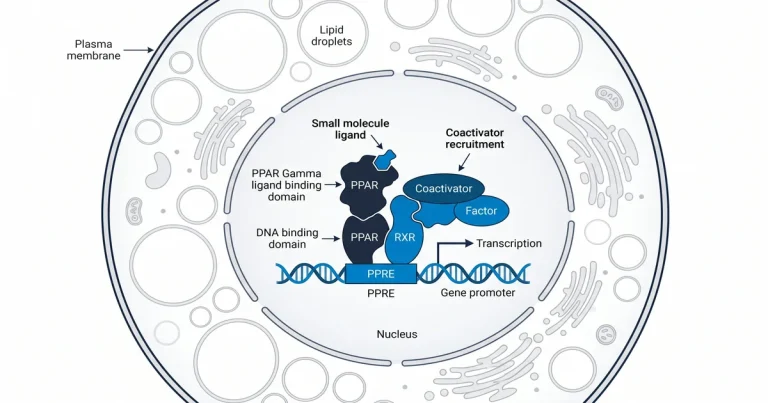
PPAR Gamma Pathway Peptide Research: Nuclear Receptor
PPAR gamma peptide research examines how ligands activate this nuclear receptor to regulate lipid metabolism and inflammation gene expression in lab models.
PPAR gamma peptide research examines how ligands activate this nuclear receptor to regulate lipid metabolism and inflammation gene expression in lab models.
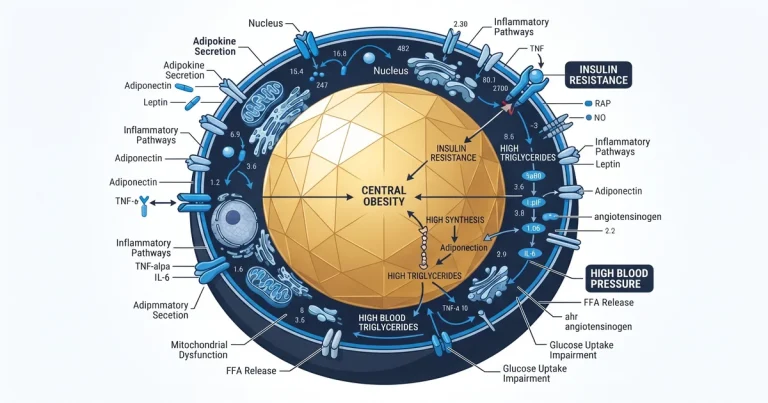
Research overview: Peptides in Metabolic Syndrome Research Models. COA-verified peptides for lab use. HPLC + mass spec verified. Next Level Pharm.
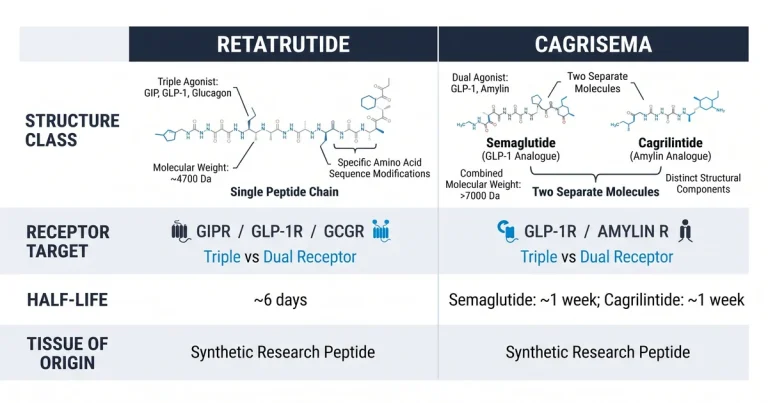
Research overview: Retatrutide vs CagriSema: Triple vs Dual Receptor Research. COA-verified peptides for lab use. HPLC + mass spec verified. Next Level Pha
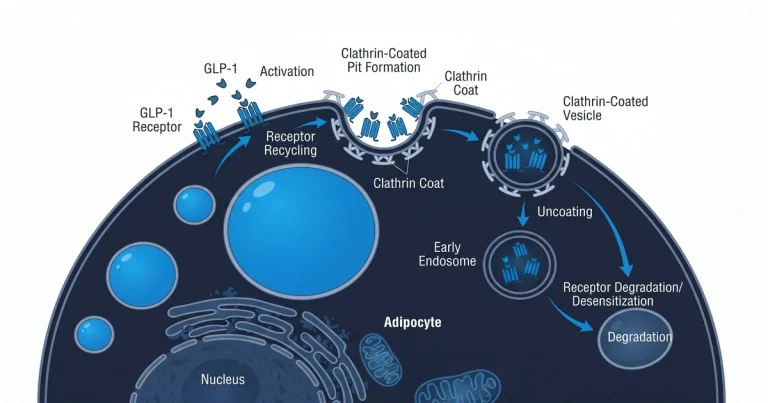
Research overview: GLP-1 Receptor Internalization: Desensitization Research. COA-verified peptides for lab use. HPLC + mass spec verified. Next Level Pharm
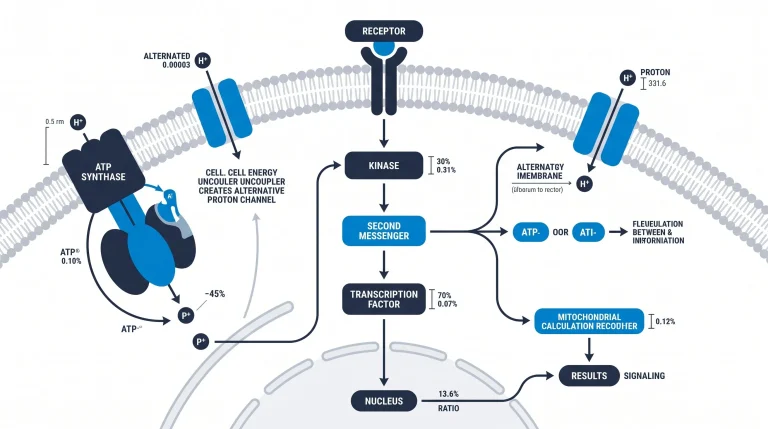
BAM15 is a mitochondrial uncoupler that works by separating fuel oxidation from the process of adenosine triphosphate (ATP) synthesis.
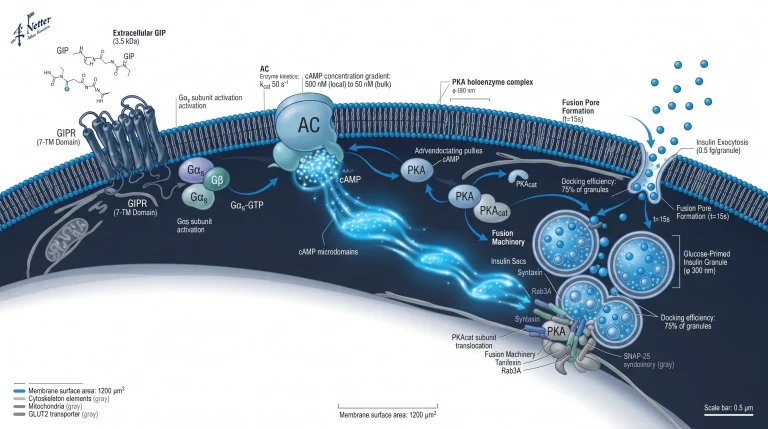
GIP receptor peptide research maps how this class B GPCR triggers glucose-dependent insulin signaling. Studies examine dual agonists in lab models.
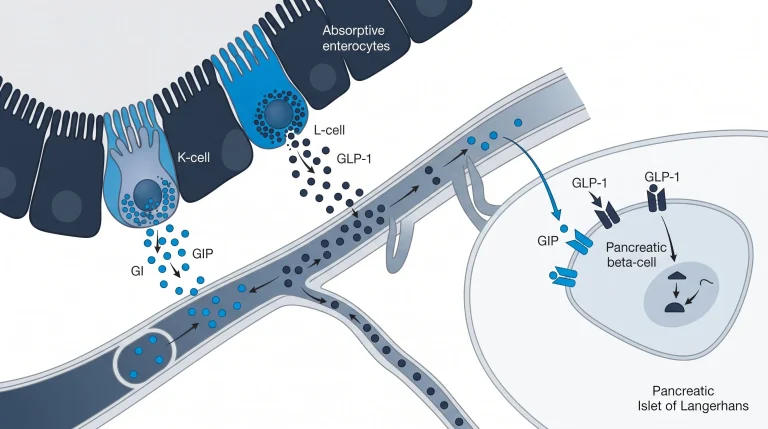
An incretin is a gut hormone that triggers insulin release after eating. GLP-1 and GIP pathways explained for lab researchers. COA-verified, batch-tested.
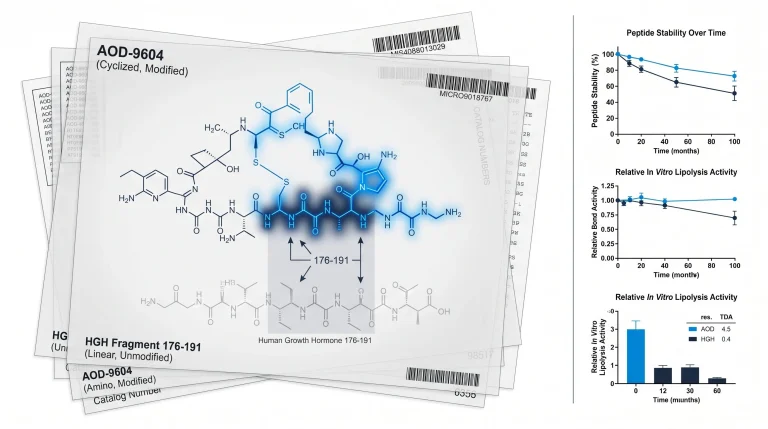
A lab research comparison of AOD-9604 and HGH Fragment 176-191 covering sequence, receptor targets, half-life, and fat cell signaling pathways.

A research overview of AOD-9604, HGH Fragment 176-191, and 5-Amino-1MQ: three compounds studied in adipocyte cell models for distinct metabolic mechanisms.
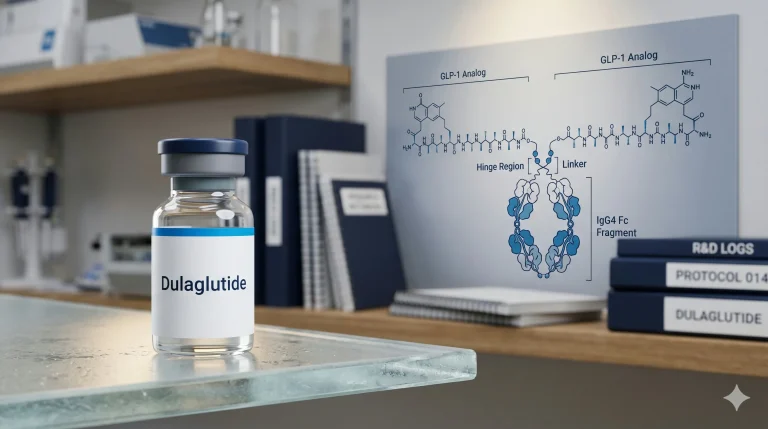
A research overview of dulaglutide: a GLP-1R agonist with an IgG4 Fc fusion, studied in cell and animal models for GLP-1R binding and cAMP signaling.